Sand Springs 40 Case Study: Turning Fully Wooded Tulsa County Land Into Rural Homesite Tracts
Not every land deal starts with a perfect layout.
Some properties have awkward pieces, utility questions, county split limits, neighbor issues, and parts of the land that are harder to explain to buyers. That does not automatically make the deal bad. It just means the strategy has to be built around the real problems instead of pretending they are not there.
That was the case with Sand Springs 40.
This was an off-market, fully wooded 40-acre property in Tulsa County near Sand Springs. I helped an investor find and purchase the property for $160,000. At first, the idea was to consider selling it as one whole tract. After looking closer at the layout, the buyer demand, the road frontage, and the utility potential, I coached the investor that the property would likely perform better if it was split into smaller rural tracts.
That decision changed the entire project.
The land was eventually split and sold as multiple tracts for a combined $388,000 before survey costs, commissions, closing costs, holding costs, improvement costs, and other project expenses.
The value was not created by clearing the whole property, building roads through it, or turning it into a polished subdivision. The value was created by understanding the county process, solving an awkward tract problem, verifying utilities, making targeted improvements, and adjusting the sales strategy when buyers showed us what they actually wanted.
The Original Property
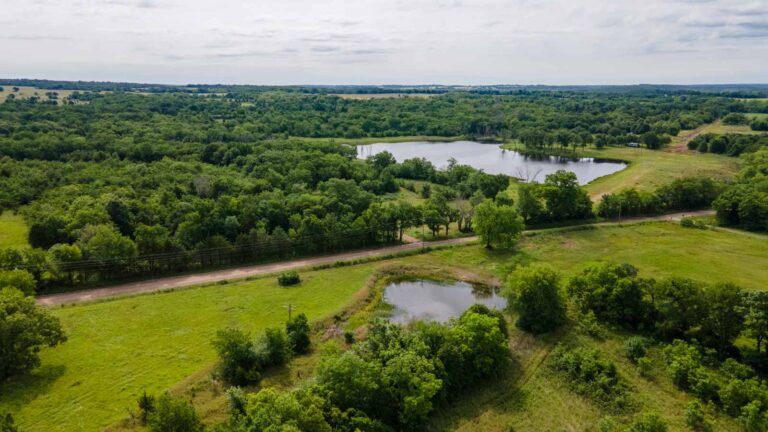
The original property was a fully wooded 40-acre tract in Tulsa County near Sand Springs.
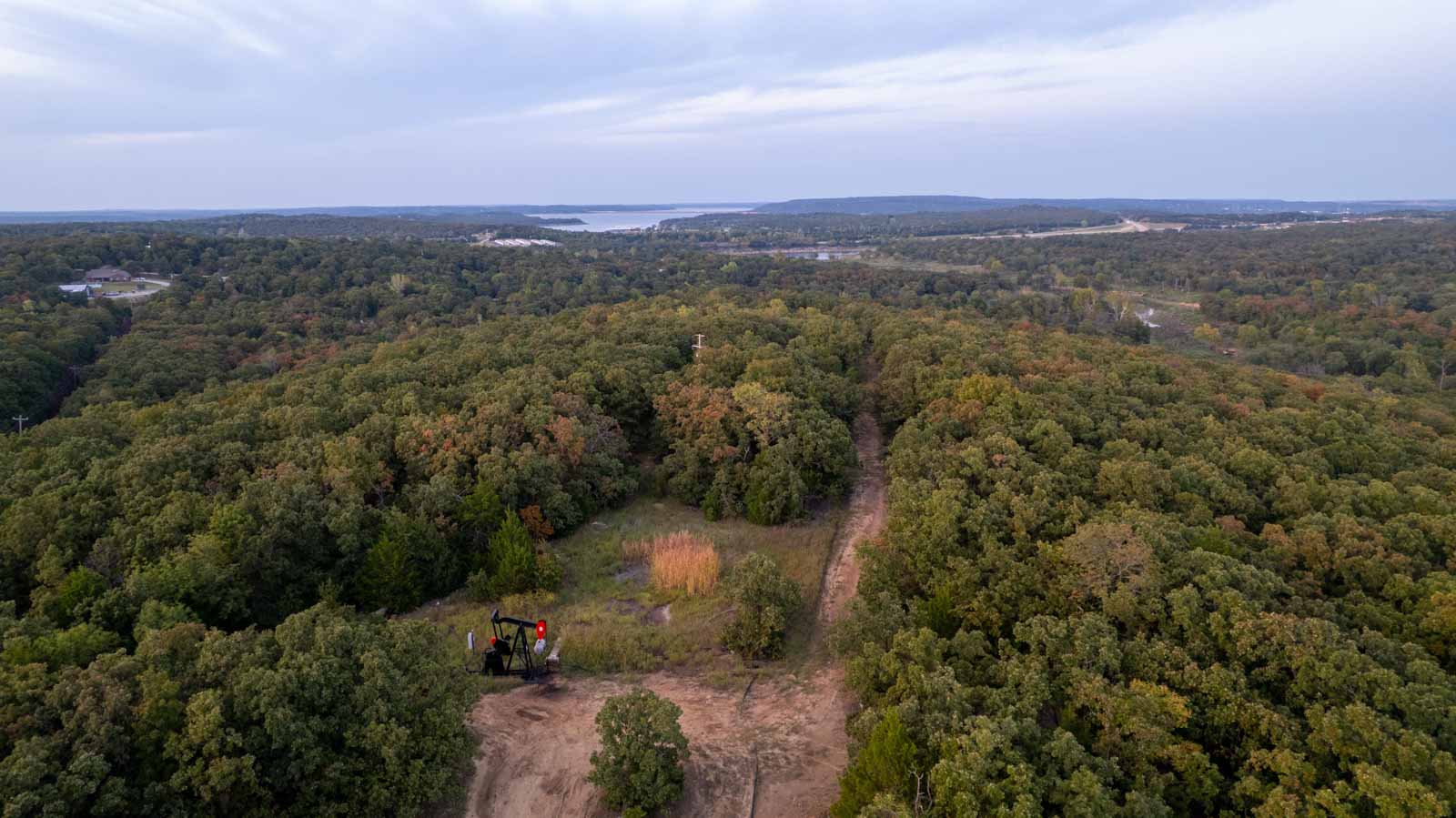
It was not open pasture. It was not a clean, easy-to-read property from the road. It was thick, wooded land with natural privacy and rural appeal, but it needed the right buyer and the right presentation.
A fully wooded tract can be attractive, but it also creates challenges.
Buyers may have trouble visualizing homesites. They may wonder what parts of the land are usable. They may not know how much clearing will cost. They may worry about utilities, driveway placement, septic feasibility, and whether the property is too raw for what they want to do.
That is why the strategy mattered.
The property had road frontage, which gave us options. All of the tracts had road frontage, which helped avoid the need for shared access or private easements. That was a major advantage.
It also had a strong utility story once we worked through the details. Rural water was available through Sand Springs, electric service was available through Indian Electric Co-op, telecommunications were available through Cimarron Telephone, gas service was available through Keystone Rural Gas District 1, and buyers would need to install their own septic or aerobic system.
For rural land buyers, those details matter. A wooded tract with access to water, electric, telephone service, and rural gas is a very different conversation than a wooded tract where every utility question is unknown.
Why Selling It Whole Was Not the Best Strategy
The investor could have tried to resell the entire 40 acres as one piece.
That would have been simpler. One listing, one buyer, one closing.
But simpler is not always better.
A 40-acre wooded tract has a smaller buyer pool than several smaller rural tracts. The total price is higher, the buyer has to want that much land, and the buyer has to be comfortable taking on the entire property as one project.
Smaller tracts create more buyer options.
Some buyers want 5 acres. Some want 10 acres. Some want a larger homesite with room to spread out. Some want wooded privacy but not a full 40-acre purchase. By splitting the property, we could create more attainable price points and serve more buyer demand.
That is why I coached the investor to look at the property as a split opportunity instead of just a whole-tract resale.
The plan was not just “cut it up and sell it.” The plan had to work with Tulsa County, the road frontage, the awkward tract layout, and what buyers would realistically want.
The Tulsa County Lot Split Challenge
One of the biggest parts of this project was the Tulsa County lot split process.
Because of the rural lot split process, we had to be careful with how many tracts could be created from the parent property. We were effectively working within a four-tract split structure for the main property.
That created a problem.
One part of the property was a 4.5-acre piece that was separated from the rest of the land by road frontage. It was not the strongest open-market tract. It was awkward compared to the rest of the property. If we had been forced to use one of the main four splits on that piece, it would have weakened the layout of the entire project.
Instead, I helped work through a better strategy.
We sold that 4.5-acre piece to a neighbor for $20,000 through a lot line adjustment approach. That allowed the investor to move the awkward separated piece without wasting one of the stronger main tracts in the rural lot split plan.
That was a key part of the project.
On paper, $20,000 for 4.5 acres may not look impressive from a price-per-acre standpoint. But that sale was not just about the price of that one tract. It helped clean up the overall layout and allowed the remaining property to be split in a way that made more sense.
Sometimes the best move in a land project is not maximizing every single acre individually. Sometimes it is solving the piece that is holding back the rest of the project.
That is what happened here.
Working Through INCOG and the Local Split Process
This was not just a basic listing project.
Part of my role was helping the investor work through the local process to determine how the property could be split and marketed. That included dealing with the Tulsa County and INCOG side of the rural lot split process and thinking through what layout would actually create the best resale value.
That type of work matters because land is not just sold on photos and price.
The structure of the split can change the outcome.
A poor split can leave awkward tracts, access issues, buyer confusion, utility problems, or leftover acreage that is hard to move. A better split can create tracts that each have a reason to exist.
For Sand Springs 40, the lot line adjustment with the neighbor helped make the rest of the split cleaner. It allowed the investor to sell the awkward tract to the person it made the most sense for, while keeping the main resale tracts more marketable to the general public.
That created a better result for the investor, the neighbor, and the future buyers.
The Pipeline Sign That Needed Research
Another detail that mattered was a pipeline marker along the road.
The sign said to call OKIE811 before digging because there was a pipeline underground. In that area, there is a lot of oil activity, so the first concern was whether the pipeline was tied to oil infrastructure.
That could have changed how buyers viewed the property.
Instead of guessing, I started calling and researching. After working through it, I learned the line was actually a natural gas line through Keystone Rural Gas District 1.
That changed the story.
What originally looked like a potential concern became a selling point. Rural gas service is not available on every wooded acreage tract. For buyers thinking about building, having rural gas available can be a major benefit.
This is a good example of why land details need to be verified before they are marketed.
If we had assumed it was oil-related infrastructure, we may have undersold the property or created unnecessary concern. If we had ignored it completely, buyers may have noticed the marker and become nervous. By verifying the utility, we were able to explain it clearly.
That is the difference between guessing and doing the work.
Utility Availability Helped Buyers Understand the Opportunity
For rural homesite buyers, utility availability is one of the biggest questions.
On this property, the utility picture became a strong part of the marketing story.
Rural water was available through Sand Springs. Electric was available through Indian Electric Co-op. Telecommunications were available through Cimarron Telephone. Rural gas service was available through Keystone Rural Gas District 1. Septic or aerobic systems would need to be installed by the future buyers.
That mix gave buyers a clearer path.
It did not mean the land was fully improved. It did not mean every buyer could build without doing their own due diligence. But it did mean the property had utility access points that made it much more practical than raw land with no clear service options.
This mattered because the land was fully wooded.
When a tract is wooded, buyers already have to think about clearing, driveway placement, building sites, and septic planning. If utility availability is also unclear, the property can feel overwhelming. When utilities can be explained, the land becomes easier to understand.
That helped the project.
Targeted Improvements Instead of Overbuilding
We did not need to over-improve the property.
Instead, I coached the investor to make targeted improvements that would help buyers visualize the land better.
The investor paid about $4,500 to a local contractor to install a gate, culvert, two dump truck loads of gravel, and mulch a rough homesite area with a skid steer for future buyers.
That was a smart improvement package.
It did not turn the property into a finished homesite. It did not require a huge budget. But it helped buyers see how the land could work. A gate, culvert, gravel entrance, and rough homesite can make a wooded tract feel much more approachable.
Buyers do not always need everything finished.
They need to see a path forward.
On raw wooded land, even a small opening can help a buyer imagine where a home might go, where a driveway might start, and how the property could be used.
That $4,500 improvement helped create confidence without overcapitalizing the project.
The Tract 1 Challenge
Tract 1 was one of the harder pieces to sell.
It was 10.78 acres and eventually sold for $90,000, closing on January 9, 2026. It was on the market for 312 days, making it the longest-running tract in the project.
The reason was not just the price.
Tract 1 had a real neighboring property issue. The neighbor to the north had a mobile home and a lot of junk around the property, which hurt the appeal of the tract. That kind of thing matters more than some sellers realize.
A tract can have good acreage, good road frontage, and utility potential, but neighboring property condition can still affect buyer perception.
Buyers do not only buy the land. They buy the setting.
Tract 1 also had oil or pump-related activity at the back of the tract, which created another layer of concern for some buyers.
Even with those challenges, the tract sold. But it took time, and the final result reflected the reality of the tract.
That is important for a case study because not every tract in a split performs the same way. Some pieces sell quickly. Some take longer. Some have issues that require patience.
Tract 1 was the problem tract, but it still became part of the overall successful result.
Tract 2 and Tract 3
Tract 2 was 5.5 acres and sold for $61,000, closing on October 22, 2025. It had 143 total days on market.
Tract 3 was 6.5 acres and sold for $67,000, closing on October 24, 2025. It had 133 total days on market.
These tracts represented the more typical rural homesite buyer range for this project.
They were not massive acreages, but they gave buyers enough space to have privacy, trees, and room for a future home. For buyers who wanted a wooded tract near Sand Springs without buying the full 40 acres, these pieces made sense.
The price points were also more attainable than the full property.
That is part of why the split strategy worked. A buyer may not be able to purchase a full 40-acre wooded property, but a 5.5-acre or 6.5-acre tract is a different conversation.
Tract 4 and the Flexible Survey Strategy
Tract 4 was one of the best examples of staying flexible during a land project.
It was originally being advertised around 10 acres for $120,000. Then the buyer told us their budget went up to $150,000and they wanted to buy more land.
Instead of forcing the original plan, I worked with the buyer’s agent and helped adjust the survey layout so the buyer could purchase more acreage.
That tract ended up selling as 12.54 acres for $150,000, closing on August 25, 2025 after 62 days on market.
That was a strong result.
It helped the buyer get the larger tract they wanted, and it helped the investor sell more acreage at a higher total price.
This is one of the reasons land projects need active management. If the plan is too rigid, you can miss opportunities. If you are paying attention to buyer feedback, sometimes you can adjust the layout and create a better result for everyone.
The key is making sure the adjustment still works with the survey, county process, remaining tract layout, and seller goals.
In this case, it did.
The Final Sales Results
The investor purchased the original off-market 40-acre property for $160,000.
The tracts sold as follows:
Tract 5, 4.5 acres, sold to a neighbor for $20,000.
Tract 1, 10.78 acres, sold for $90,000.
Tract 2, 5.5 acres, sold for $61,000.
Tract 3, 6.5 acres, sold for $67,000.
Tract 4, 12.54 acres, sold for $150,000.
Combined, the sales totaled $388,000.
Compared to the original $160,000 purchase price, that is a $228,000 gross spread before expenses.
That is not net profit.
The project still had survey costs, commissions, closing costs, holding costs, improvement costs, and other normal expenses. I also charged more than a simple listing structure because of the additional work involved with the Tulsa County and INCOG lot split process, the rural lot split strategy, the lot line adjustment, the utility research, and the overall project management.
But from a gross resale standpoint, the numbers show why the split strategy made sense.
Why This Deal Worked
This project worked because the investor did not just buy land and hope.
There was a plan.
The property was purchased off market at a basis that allowed room for a split. The awkward 4.5-acre piece was handled through a neighbor sale and lot line adjustment. The remaining tracts were designed around the rural lot split limitations. Utility questions were researched instead of guessed. A small amount of targeted improvement helped buyers visualize the land. The survey strategy stayed flexible when a buyer wanted more acreage.
That combination created the result.
This was not a perfect property. It was fully wooded. It had an awkward separated tract. It had a neighbor condition issue that hurt one tract. It had a pipeline marker that needed research. It had county split limitations. It had a problem tract that sat for 312 days.
But it still worked.
That is the point.
Good land deals are not always clean. Sometimes they work because the problems are understood, priced, and handled correctly.
What This Deal Teaches Landowners
If you own wooded land in Tulsa County, Sand Springs, or another rural part of Oklahoma, this case study shows why the sale strategy matters.
Selling the whole property as one tract may be the easiest route, but it may not always create the best result.
If the land has road frontage, utility access, strong buyer demand, and a layout that can be split legally and practically, smaller tracts may create more value.
But it has to be studied first.
You need to understand county requirements, survey limitations, access, utility availability, buyer demand, and whether each tract will make sense on its own.
A bad split can create problems. A smart split can unlock value.
What This Deal Teaches Investors
For investors, Sand Springs 40 is a good example of why land strategy matters after the purchase.
The investor could have bought the property and tried to resell the whole 40 acres. That may have worked, but the split strategy created a much stronger result.
The key was not just dividing the property. The key was solving the issues along the way.
The awkward 4.5-acre piece needed a specific buyer. The main split had to work within local rules. The utility concerns needed research. The wooded tracts needed enough improvement to help buyers visualize the land. One buyer wanted more acreage, so the survey plan needed to be adjusted. One tract had neighbor and oil-activity concerns, so it took longer.
That is real land investing.
It is not just buying low and selling high. It is solving the problems between those two points.
What This Deal Teaches Buyers
For buyers, this case study shows why smaller rural tracts can be valuable even when they come from a larger split.
The Sand Springs 40 tracts gave buyers access to wooded acreage, road frontage, utility availability, and future homesite potential without requiring them to buy a full 40 acres.
Some buyers wanted more acreage. Some wanted a smaller tract. Some needed to understand utilities. Some needed help visualizing a homesite in the woods.
That is normal.
Buyers should always do their own due diligence, especially on wooded rural land. They should confirm utilities, septic requirements, access, restrictions, survey boundaries, and any pipeline or oil activity concerns.
But when those details are clear, a wooded tract can be a great fit for someone who wants privacy, trees, and room outside of town.
The Bigger Lesson
The Sand Springs 40 deal worked because the strategy matched the property.
The investor purchased the property off market for $160,000. Instead of reselling it as one 40-acre tract, I helped coach the investor through a split strategy that worked with Tulsa County, INCOG, the rural lot split limits, the road frontage, the utility situation, and the buyer demand.
We sold the awkward 4.5-acre separated piece to a neighbor for $20,000. We improved marketability with a gate, culvert, gravel, and a rough mulched homesite area. We verified that a concerning pipeline marker was actually tied to rural gas service. We adjusted the survey when a buyer wanted to purchase more acreage. We worked through a problem tract that took longer because of neighboring property conditions.
In the end, the tracts sold for a combined $388,000 before expenses.
That is a strong result from a property that was not simple on paper.
The deal worked because the land was bought right, the problems were handled, and the exit strategy was managed instead of guessed.
Thinking About Selling or Splitting Land in Oklahoma?
If you own land in Oklahoma and are wondering whether it should be sold as one piece or split into smaller tracts, I can help you look at the numbers, the county process, the buyer demand, and the practical issues before you make a decision.
If you are an investor looking at rural land opportunities, I can help you study the property before you buy and think through the resale strategy before money is already on the line.
Seller links
Selling Land in Oklahoma Guide
How To Improve Land Before Selling In Oklahoma
How To Market Land For Sell In Oklahoma
Selling a Home
Selling Vacant Land
Selling Commercial
Selling Farm Ranch
Selling New Construction
Broken Arrow Real Estate Agent
Tulsa Real Estate Agent
Areas I Serve Across Oklahoma
Commercial Land in Broken Arrow
Media
Contact Me
Buyer Links
Buying Land In Oklahoma Guide
How To Confirm Legal Access When Buying Land In Oklahoma
How To Confirm Rural Water
How to confirm electric
How to confirm utilities
How to see if your land is buildable
How To Check Septic And Sewer Availability On Land In Oklahoma
How To Check Internet And Cell Service On Rural Oklahoma Land
How To Check Utility Easements On Land In Oklahoma
Gas And Propane Availability On Land In Oklahoma
Buying Vacant Land