buying Vacant Land in Oklahoma
How to navigate vacant land real estate without getting burned.
Browse Vacant Land by Area
Buying Vacant Land in Oklahoma
Buying land is different from buying a house.
With a house, you can walk through the front door, look at the layout, see the bedrooms, check the kitchen, and get a pretty good feel for whether it works. Land is not that simple.
A property can look great in photos and still have serious issues with access, utilities, floodplain, restrictions, topography, oil activity, easements, or buildability. Another property may look rough online but turn out to be a strong deal once the right details are confirmed.
That is why buying land the right way starts with understanding what actually matters.
Price and photos are only the surface. The real question is whether the land works for what you want to do with it.
Are you wanting to build?
Are you wanting recreational land?
Are you buying for hunting, privacy, or weekend use?
Are you looking for a long-term investment?
Are you wanting farm, ranch, or pasture ground?
Are you trying to buy land near Broken Arrow, Tulsa, Mannford, Sand Springs, Coweta, Bixby, or somewhere more rural?
Different goals require different properties.
My job is to help you find land that actually fits what you are trying to do, then help you look through the details before you commit to it.
Buying Land the Right Way Starts With the Goal
Before looking at land, the first question is not always “How many acres do you want?”
The better question is, “What are you trying to do with the land?”
A five-acre homesite buyer is going to care about different things than someone buying 40 acres for hunting. A buyer wanting a future barndominium or custom home may care heavily about utilities, road frontage, driveway access, septic feasibility, school district, and internet. A recreational buyer may care more about timber, trails, ponds, creek bottoms, privacy, and wildlife.
An investor may care about resale, location, access, surrounding growth, and whether the property has multiple possible uses.
A farm and ranch buyer may care about pasture, fencing, water, gates, soil, hay production, and livestock use.
That is why I do not like starting with generic land advice.
The right land depends on the buyer.
The Biggest Mistake Land Buyers Make
The biggest mistake I see buyers make is not confirming utilities or understanding what those utilities may cost.
A buyer may fall in love with a property because it has a good price, pretty trees, and a nice location. Then later they find out water is not available, electric is farther away than expected, the property needs a well, septic may be complicated, or internet is limited.
That can change the whole deal.
Utilities are not the only issue, but they are one of the biggest. A property that looks affordable on the front end can become expensive fast if the buyer has not checked what it will actually take to use the land.
I would rather help a buyer ask those questions before closing than have them find out the hard way after they own it.
What to Look for When Buying Land
A good piece of land is not just about location.
Location matters, but it is not enough by itself. The property also has to function for your intended use.
Access matters. If the property does not have legal access or a usable way to physically get onto it, that can create major problems. You need to understand both legal access and physical access.
Utilities matter. Electric, water, septic options, natural gas, internet, and cell service can all affect cost and usability.
Topography matters. Flat land, sloped land, wooded land, rocky land, wet areas, and floodplain can all change what can be built and how the property can be used.
Layout matters. Road frontage, property shape, tree lines, open areas, ponds, creek access, and buildable spots all influence whether the land works.
Restrictions matter. Some properties have covenants, easements, zoning, deed restrictions, mobile home restrictions, HOA rules, or county requirements that can affect your plans.
Future use matters. A property that works for weekend recreation may not work for a house. A property that works as a homesite may not work for cattle. A property that looks good for investment may not fit your timeline or risk tolerance.
These are the details that often do not show up clearly in a listing.
Legal Access and Physical Access Are Not the Same
One of the first things I care about when reviewing land is access.
Legal access means there is a legal right to access the property. Physical access means you can actually get there in the real world.
Those are not always the same thing.
A property may have legal access on paper, but the entrance could be grown up, washed out, muddy, blocked, or difficult to use. Another property may have a trail or road that people have used for years, but the legal right to use it may need to be verified.
That is why access should be checked early.
If the property is landlocked, has unclear access, depends on an easement, or requires crossing someone else’s land, that can affect value, financing, resale, and future use.
Access is not something to assume.
How to Confirm Legal Access When Buying Land
Utilities Can Make or Break a Land Purchase
Utilities can completely change whether a property works.
For some buyers, utilities are not a big concern. If the goal is hunting or recreation, the buyer may not need much right away. But if the goal is building a home, cabin, shop, or barndominium, utilities become a much bigger deal.
Electric may be at the road, across the road, or far away. Rural water may be available, but that does not always mean a meter is easy or cheap to get. Some areas may require a well. Septic usually needs to be evaluated based on soil, location, and county or state requirements. Internet may be available through fiber, fixed wireless, satellite, or not much at all.
The key is to verify.
A listing may say utilities are nearby, but “nearby” can mean different things. Buyers should not assume water, electric, septic, or internet will be simple just because surrounding properties have them.
How to Confirm Utilities on Land in Oklahoma
Septic, Rural Water, Electric, and Internet All Matter Differently
Not every utility matters the same way for every buyer.
For a homesite buyer, septic feasibility can be a big deal. If the property cannot support a standard septic system or needs a more expensive setup, that affects the total cost.
Rural water can also be a major factor. A water line nearby does not always guarantee an easy meter. Buyers may need to verify provider availability, meter cost, line capacity, distance, and whether any upgrades are needed.
Electric access matters too. If electric is nearby, that helps. If it is far away, extension costs can become a serious issue.
Internet is becoming more important than it used to be. A lot of rural buyers still need to work from home, stream, run security cameras, or stay connected. Fiber, fixed wireless, satellite, and cell coverage can all change how usable the property feels.
The right question is not just “Are utilities available?”
The better question is “What will it take and cost to use this property the way I want?”
Real Example: A 40-Acre Mannford-Area Buyer
A good example of why due diligence matters was a 40-acre property near the Mannford and Sand Springs area.
The buyer was concerned about oil activity and was not sure the property had utilities. That uncertainty could have easily scared someone off.
After looking into it, we learned there was one pump jack in a back section of the property. We also found that natural gas was along the road through Sand Springs, and rural water and electric were available.
That changed the way the property looked.
Instead of just seeing uncertainty, the buyer could understand the actual situation. There was oil activity, but it was limited to a back section. Utilities were not as hopeless as they may have seemed at first.
That buyer ended up getting 40 acres for $160,000 in an area where land was commonly running around $8,000 to $11,000 per acre.
That was a strong deal.
The point is not that every uncertain property is a good deal. The point is that buyers should not guess. Sometimes due diligence reveals a problem. Sometimes it reveals an opportunity.
Oil Activity, Easements, and Rural Property Issues
In Oklahoma, oil and gas activity is something buyers may run into.
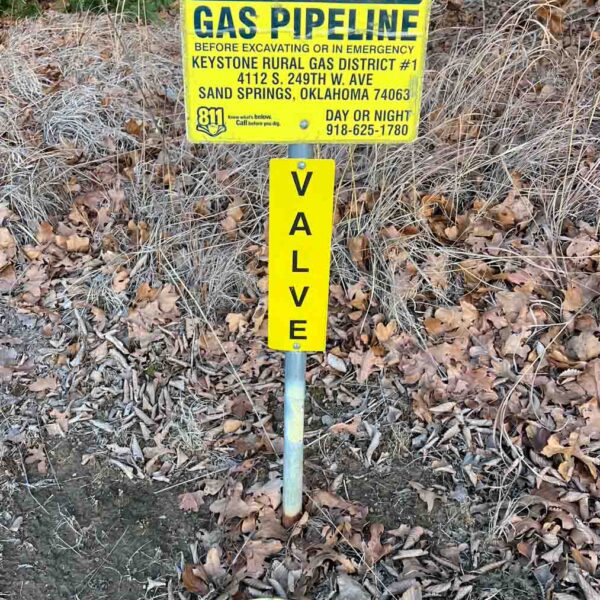
A pump jack, old lease road, tank battery, pipeline, or easement does not automatically mean a property is bad. But it does mean buyers need to understand what is there, where it is, and how it affects the land.
Some buyers may be fine with oil activity if it is tucked away and does not interfere with their use. Others may not want it at all.
Easements are similar. A utility easement, pipeline easement, access easement, or road easement may be normal, but it still needs to be understood.
These issues can affect where you build, where you fence, where you place a driveway, how you use the land, and how future buyers view it.
How to Check Utility Easements on Land in Oklahoma
Floodplain, Topography, and Buildability
A property can look beautiful and still have buildability problems.
Floodplain is one of the big things to check. If a property has creek bottoms, low areas, lake frontage, or drainage paths, part of the land may be in floodplain. That does not always make it unusable, but it can affect building, insurance, financing, and future plans.
Topography matters too. Steep ground, ravines, wet-weather areas, rocky slopes, and heavy timber can all change how the land functions.
A property may have 20 acres on paper, but only a small portion may be practical for a home, shop, driveway, septic system, or pasture.
That is why buyers need to look beyond acreage.
Can You Build on Land in Oklahoma?
Restrictions, Zoning, and County Rules
Before buying land, buyers need to understand what rules apply.
Some properties have deed restrictions. Some have HOA rules. Some have zoning. Some allow mobile homes, manufactured homes, livestock, shops, barns, short-term rentals, or RV use. Some do not.
Inside city limits or near growing areas, rules can be more restrictive. Outside city limits, there may be more flexibility, but that does not mean there are no rules at all.
Counties, utility providers, rural water districts, DEQ requirements, floodplain rules, and private restrictions can still affect what you can do.
If you have a specific use in mind, it needs to be checked before closing.
Do not assume land can be used however you want just because it is vacant.
Photos Can Be Misleading
Online photos are helpful, but they do not tell the whole story.
A property can look amazing in drone photos and still have poor access, floodplain, no utilities, or bad terrain. Another property can look plain online but have strong potential once you walk it.
Photos also do not always show road conditions, mud, easements, neighboring properties, trash, old oil activity, fences, wet areas, or how hard it is to actually get around.
That is why walking the land matters.
For larger properties, a side-by-side, truck, or good trail system can make a big difference. You need to see enough of the property to understand what you are buying.
Do not buy land based only on pretty photos.
Buying Land Near Broken Arrow, Tulsa, and Surrounding Areas
The Broken Arrow and Tulsa areas offer a wide range of land opportunities.
You can find small acreage homesites, rural tracts, recreational land, farm and ranch ground, investment property, and development land. But the closer you get to growth corridors, city limits, and utility infrastructure, the more the details matter.
A few miles can change everything.
One property may have city water nearby, paved roads, and strong development potential. Another may require rural water, septic, gravel road access, and more planning. Land near Broken Arrow, Bixby, Coweta, Wagoner County, Tulsa County, Sand Springs, Mannford, and other surrounding areas can all attract different buyer types.
The right property depends on what you are trying to do.
Using MLS Search Alerts to Find Better Land Options
A lot of buyers start by scrolling Zillow, LandWatch, Realtor.com, or random land sites.
That is fine for browsing, but it can get messy quickly.
If you know what you are looking for, I can help set up a more focused property search based on your goals. That may include acreage, location, price range, property type, county, school district, road frontage, land use, or other criteria.
A good search setup helps you track new properties as they come on the market instead of randomly checking every site over and over.
It also helps narrow the search over time.
Sometimes buyers start with a wide idea, then refine it after seeing what is actually available. Maybe they thought they wanted 10 acres but realize they need 20. Maybe they thought they wanted to be closer to town but realize the price makes more sense farther out. Maybe utilities matter more than they expected.
A good search is not just about finding listings.
It is about learning the market. Sign up for a MLS Search HERE
The Buying Process for Vacant Land
Buying land is not complicated, but it does require a different approach.
First, we talk through what you are trying to do. Acreage, location, budget, timeline, and intended use all matter.
Then we narrow the search. The goal is not to send you every random property on the market. The goal is to find options that may actually fit.
Once a property looks interesting, we start reviewing the details. That may include access, utilities, restrictions, floodplain, topography, easements, oil activity, surrounding use, and price compared to the market.
If the property still makes sense, then we look at an offer strategy. That includes price, closing timeline, inspection period, financing, and what needs to be verified before closing.
After that, we move through due diligence. This is where buyers may confirm utilities, talk with providers, review surveys, inspect the land, check septic possibilities, verify access, and make sure the property still fits the plan.
Then we work toward closing with as much clarity as possible.
Due Diligence Before Closing
Due diligence is where a lot of land deals are won or lost.
This is the period where the buyer needs to confirm the important details before fully committing.
That may include:
Legal access
Physical access
Electric availability
Water availability
Septic feasibility
Internet and cell service
Floodplain
Restrictions
Easements
Oil and gas activity
Survey needs
Road maintenance
Fence lines
Buildable areas
Financing requirements
Not every property needs the same level of review. A small acreage homesite and a large recreational tract may have different concerns.
But the main goal is the same: understand what you are buying before you own it.
Why Work With Someone Focused on Land
Land requires a different level of attention.
It is not just about opening a door and writing an offer.
When I help buyers with land, I am looking at how the property actually functions. I want to know whether the access makes sense, whether utilities are realistic, whether the land matches the buyer’s goal, and whether there are red flags that need to be checked.
I am not there to talk you into every property.
Sometimes the best help is pointing out a problem early so you do not waste time. Sometimes the best help is digging into a property that looks uncertain and finding out it is actually a strong opportunity.
That is the value of slowing down and checking the right things.
Let’s Find Land That Actually Works for You
If you are thinking about buying land in Oklahoma, the first step is getting clear on what you want the land to do.
From there, we can look at acreage, location, budget, utilities, access, and the kind of properties that fit your goals.
Whether you are looking near Broken Arrow, Tulsa, Sand Springs, Mannford, Coweta, Bixby, or a more rural part of Oklahoma, I would be happy to help you talk through your options and set up a search that makes sense.
Let’s find you land that actually works for what you want to do.
Continue Researching Resources for buying land in Oklahoma
How To Confirm Legal Access When Buying Land In Oklahoma
How to see if your land is buildable
How To Check Septic And Sewer Availability On Land In Oklahoma
How To Check Internet And Cell Service On Rural Oklahoma Land
How To Check Utility Easements On Land In Oklahoma