
Oklahoma land buyer resources
How to Check Septic and Sewer Availability on Land in Oklahoma
Before choosing a homesite, find out how the property will handle wastewater. Confirm sewer service or investigate septic suitability before closing.
The short answer
Confirm sewer first. If it is unavailable, evaluate the site for septic.
Ask the sewer provider whether your exact property can connect and what that connection would require. If public sewer is not an option, contact Oklahoma DEQ and qualified septic professionals about the soil testing, site review, and system requirements for your plans.
Nearby homes and available acreage do not guarantee that your preferred septic system will work on the tract. Investigate the actual homesite and wastewater area before making final building plans.
Road frontage, trees, ponds, and views are easy to notice. Wastewater is less visible, but it can be just as important when deciding whether land fits a home, barndominium, cabin, or development.
As an Oklahoma land agent, I encourage buyers to address septic and sewer questions early in their due diligence period. The goal is to understand the workable options before closing.
Start with the service provider
Being near town does not confirm sewer availability.
Public sewer may be available in cities, subdivisions, commercial areas, and other developed locations. Some properties near town still use on-site systems.
Ask the municipality or sewer authority:
- Can this exact parcel connect to public sewer?
- Where is the available connection point?
- Is capacity available for the proposed use?
- What tap, connection, or other fees apply?
- Would a line extension or other construction be needed?
- What approvals and installation steps are required?
- Can the requirements and estimated costs be provided in writing?
Give the provider a map showing the tract and proposed building location. An answer about the surrounding area is only a starting point.
When public sewer is unavailable
Understand the on-site wastewater option.
A septic system treats and disperses wastewater on the property instead of sending it into a public sewer network. The suitable system depends on the site and proposed use.
Factors to review include:
- Soil characteristics and available soil depth.
- Drainage, groundwater conditions, and slope.
- Floodplain and other site constraints.
- Usable space and required separation distances.
- Nearby water sources, structures, and property boundaries.
- The planned building and wastewater demand.
Know the basic options
Conventional and aerobic systems
These are two types buyers may encounter. They are not the only possible designs, and the appropriate system should be determined through the site evaluation and design process.
Conventional septic
A conventional system generally uses a septic tank and a subsurface soil absorption area, often called a lateral field or drainfield.
Suitability depends on the soil, site conditions, available space, and applicable design requirements.
Aerobic treatment
Aerobic systems use aeration as part of wastewater treatment. Depending on the design, they may include pumps, electrical equipment, disinfection, and spray irrigation.
Ask about ongoing service, maintenance, and operating responsibilities when comparing this option.
Review the actual homesite
Soil and drainage can change the plan.
Heavy clay, shallow rock, limited soil depth, and wet ground are reasons to investigate carefully. They can affect the system options and where wastewater can be dispersed.
A general soil map may help you spot questions, but it does not replace the testing and site-specific review needed for system design.
Evaluate the area you actually intend to use. A test from another part of the tract may not answer the questions about your preferred homesite.
Look beyond total acreage
Floodplain and wet areas can limit your options.
Review mapped floodplain, creek bottoms, drainage channels, standing water, and other wet areas as part of the property evaluation.
Ask the septic professional and relevant authorities how those conditions affect the proposed wastewater system. Address any wetland questions separately when they apply.
A tract may have plenty of acreage overall but much less usable space once the house, driveway, wastewater area, and site constraints are considered together.
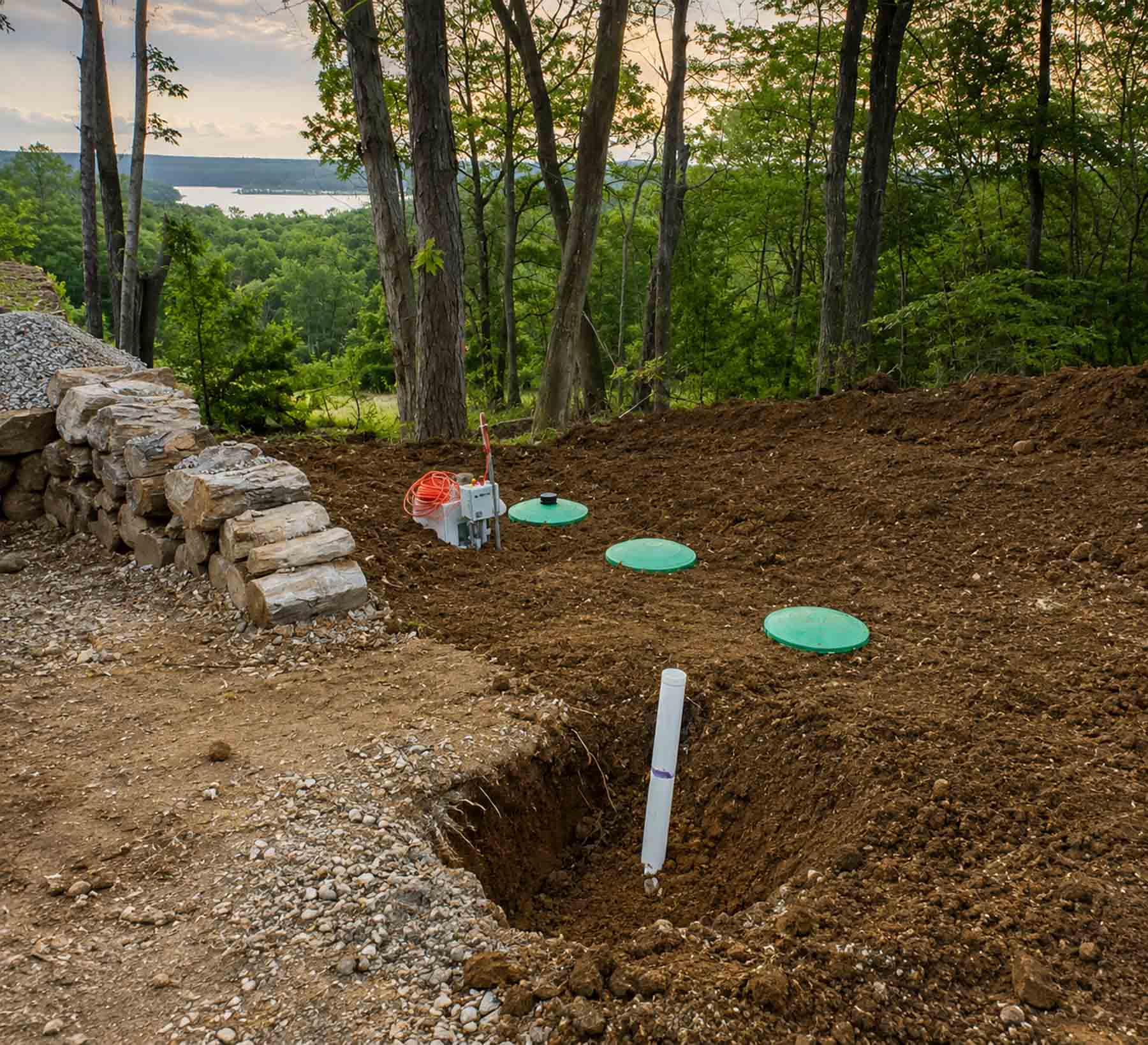
Space and layout
Consider usable space, not just lot size.
Ask about the requirements that apply to the specific property, proposed use, and wastewater system. Do not assume that a certain acreage automatically qualifies.
Review how the system fits around:
- The home, shop, driveway, and other improvements.
- Property boundaries and required setbacks.
- Water wells and other water sources.
- Easements and drainage areas.
- Any required replacement or reserve area.
This becomes especially important when splitting land, planning multiple homes, or adding a guest house or shop with plumbing. Discuss the full plan before relying on an evaluation for a single residence.
An existing system still needs attention
Find out what is there and whether it works.
If a property already has a home or older septic system, ask for records and arrange an appropriate evaluation. The presence of a tank does not establish its condition, capacity, or suitability for your intended use.
Request information about:
- The system’s age, type, and location.
- Available installation and approval records.
- Pumping, maintenance, and service history.
- Past repairs or reported problems.
- The tank, treatment equipment, and dispersal area.
- Whether the system fits any planned additions or changes.
Ask what the evaluation covers. Pumping a tank and evaluating the whole system are different services.

Your starting point
Five steps before you commit
1. Confirm whether sewer is available.
Contact the municipality or sewer authority with the exact property location. Confirm the connection point, requirements, costs, and timing.
If sewer is unavailable, move on to evaluating an on-site wastewater system.
2. Ask the seller for records.
Request any soil test, site evaluation, system design, approval, or existing-system records. Check which location and proposed use those documents address.
If the seller has no records, plan to investigate rather than assuming the property has already been evaluated.
3. Use nearby properties as context.
Ask neighbors what systems they use and which local professionals they have worked with. Their experience can help you identify useful contacts and questions.
Keep the distinction clear: their system does not confirm what will be approved on your property.
4. Contact Oklahoma DEQ and the local authorities.
Oklahoma DEQ administers the state’s on-site sewage program. Start there for information about soil testing, system design, and the process that applies to your project.
Also contact the municipality or relevant county office about local land-use, floodplain, subdivision, and sewer questions that may affect your plans.
5. Arrange a site review and written estimate.
Talk with qualified septic professionals who work in the area. Share the property map, proposed building location, intended use, and any existing records.
Ask what testing is needed, which system options may fit, what approvals remain, and what installation and ongoing service would involve.
Get the right evaluation
Perc tests, soil profiles, and site reviews
Buyers often use “perc test” as a general term for checking septic suitability. Ask DEQ or the qualified professional which testing method and documentation your site requires.
Oklahoma DEQ maintains a directory of certified soil profilers. Soil profile testing helps inform the design of on-site sewage treatment systems.
Find a DEQ-certified soil profiler
Before arranging testing, clarify:
- Where you plan to put the home and wastewater system.
- What the proposed building will be used for.
- Whether more than one home or building is planned.
- What the evaluation includes and what it does not.
- Which additional design or approval steps will remain.
Review the whole property layout
Easements can affect septic placement.
Review the survey and title documents for utility corridors, pipeline easements, drainage easements, and access easements. Ask how their terms affect the proposed system location.
Coordinate the house, well, driveway, septic area, and other improvements before settling on a final layout.
Budget for the actual property
Ask for installation and ongoing costs.
A general price range can miss important site work. Get a written estimate based on the proposed system and property conditions.
Upfront expenses
- Soil testing and site evaluation.
- Design and applicable approval fees.
- Tanks, treatment equipment, and dispersal components.
- Excavation, rock work, and site preparation.
- Electrical or plumbing work, where needed.
- Restoration and anything excluded from the quote.
Ongoing responsibilities
- Routine inspections and servicing.
- Pumping based on the system and actual use.
- Electricity and consumables, if applicable.
- Service agreements and required maintenance.
- Repairs and eventual equipment replacement.
Avoid preventable surprises
Common septic mistakes buyers make
- Assuming nearby homes guarantee septic suitability.
- Assuming sewer exists because the property is near town.
- Ignoring wet areas, floodplain, or difficult drainage.
- Choosing the homesite before reviewing wastewater placement.
- Overlooking easements and separation requirements.
- Assuming every tract can use a conventional system.
- Relying on an old test without confirming what it covers.
- Waiting until late in due diligence to arrange evaluations.
- Budgeting for installation without considering ongoing service.
Before closing
Know the wastewater plan for the land.
Septic and sewer research belongs alongside your checks for water, electric, legal access, and overall usability. Start early enough to investigate any issues before closing.
Keep these items with your property records:
- The sewer provider’s response, if applicable.
- Soil test and site evaluation documents.
- The proposed system and placement.
- Any remaining design or approval requirements.
- A written installation estimate and its exclusions.
- Maintenance expectations and ongoing costs.
This guide provides general information for Oklahoma land buyers. Confirm site suitability, design, approvals, and installation requirements with Oklahoma DEQ, the relevant local authorities, and qualified wastewater professionals.
Help with the details
Have a tract in mind? Let’s talk.
I help Oklahoma land buyers work through questions about utilities, access, floodplain concerns, and how a property fits their plans. Sometimes another set of eyes helps you identify what needs a closer look.
Corbett Campbell · OUR OK Realty
918 810 9639
corbett@ourokrealty.com
Common questions
Does five acres automatically mean septic will work?
No. The evaluation also needs to consider soil, drainage, site constraints, the proposed use, and the available system placement.
Can I assume sewer is available inside city limits?
No. Ask the sewer provider about service to the exact property, including connection requirements and costs.
Is an aerobic system always an option?
Do not assume that it is. Ask the qualified designer and appropriate authority which systems can be used on the specific site.
Should I investigate an existing septic system?
Yes. Request records and arrange an appropriate evaluation of its condition and suitability for your planned use.
Keep researching
Resources for buying land in Oklahoma
- Buying land in Oklahoma
- Confirming legal access
- Rural water availability
- Electric availability
- Confirming utilities
- Can you build on the land?
- Septic and sewer availability
- Internet and cell service
- Utility easements
- Gas and propane availability
- Oklahoma DEQ septic resources
- Oklahoma Water Resources Board