Okemah 40 Case Study: Splitting 40 Acres in Okfuskee County Into Smaller Rural Land Tracts
Some land deals are not complicated because of massive improvements, rezoning, construction, or heavy dirt work. Sometimes the opportunity is simpler than that.
Sometimes the value is sitting in the way the land is positioned, how it can be divided, what buyers in the area are already looking for, and whether someone is willing to look at the property differently than the original listing did.
That was the case with this 40-acre property in Okfuskee County, just outside the Okemah city limits. The property had an Okemah address, rural water available at the road, electric nearby, county road frontage, a good mix of open ground and timber, and enough natural character to appeal to several different types of rural land buyers.
I helped an investor purchase the original 40 acres for $130,000 on July 12, 2024. That put the purchase price at about $3,250 per acre.
After the property was surveyed and split into smaller rural tracts, I helped market and sell 35 acres from that original purchase for a combined $191,000 before project expenses, commissions, closing costs, loan fees, survey costs, and holding costs.
The first tract was listed on October 15, 2024, and the last tract I represented closed on October 1, 2025.
This was not an overnight flip. It was a rural land split that took planning, patience, better marketing, and a clear understanding of what smaller acreage buyers were looking for in that part of Oklahoma.
The Original Property
The original property was 40 acres in Okfuskee County, outside of Okemah city limits. It was rural county land with an Okemah address, and the area was relaxed from a zoning standpoint. The land was unrestricted agricultural land, which made the property more flexible for rural buyers.
That matters.
In many Oklahoma land deals, restrictions, access, floodplain, utilities, and local rules can make or break the opportunity. In this case, the land had a lot going for it. It was not inside a tight city planning area. It had road frontage. It had rural water available at the road. Electric was nearby. There were no major zoning issues that made the split unrealistic.
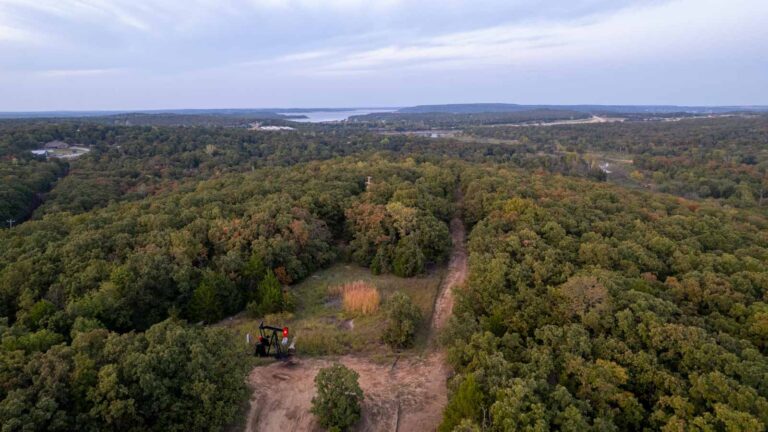
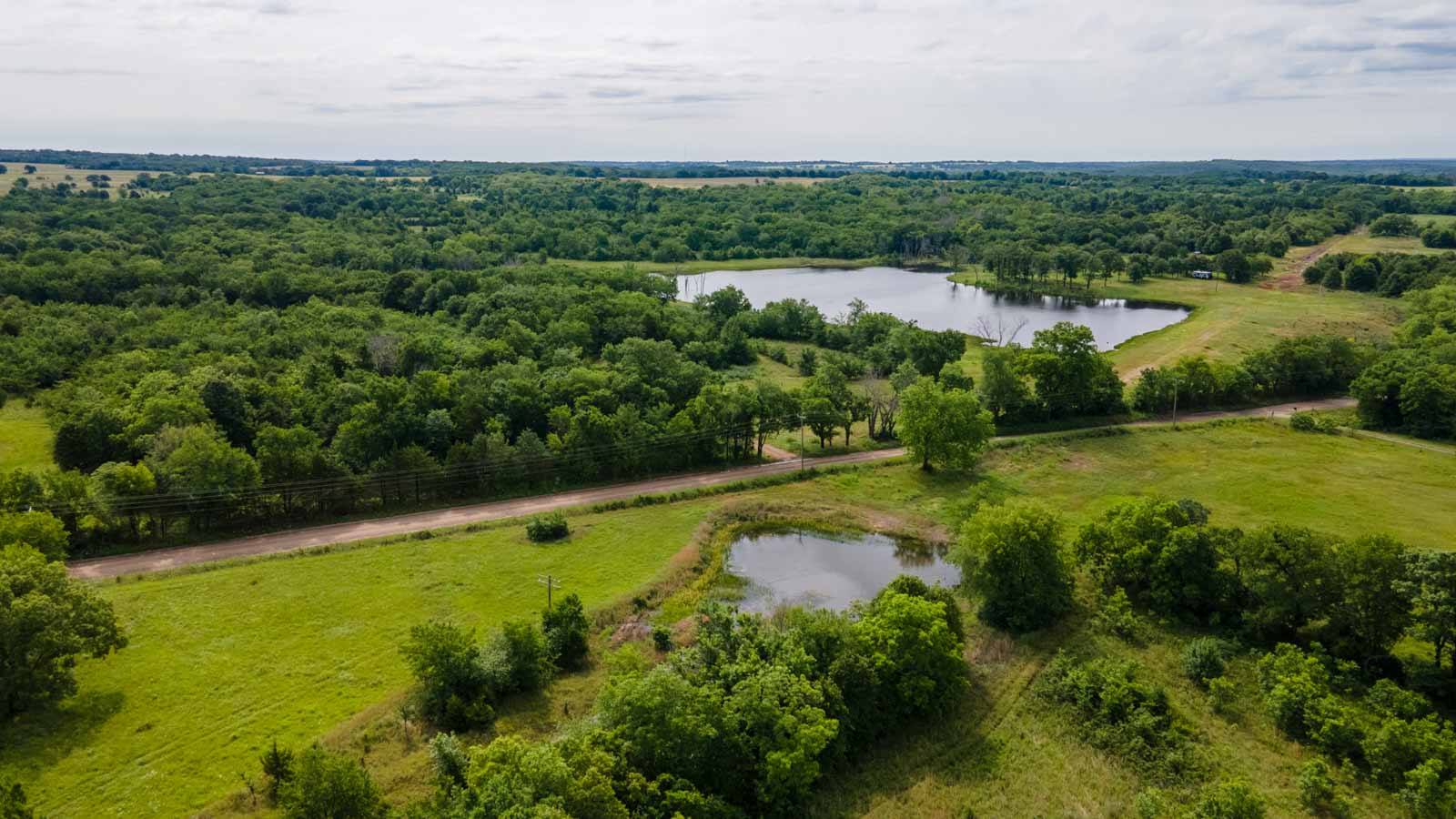
The property itself was roughly half wooded and half open ground. That mix made it more appealing than a plain open field or a fully wooded tract with limited usability. The open ground gave buyers potential homesite areas, room for animals, food plots, gardens, or open recreational use. The wooded portions gave the land privacy, cover, shade, and a better rural feel.
That combination is important in Oklahoma land sales. A lot of buyers want land that feels usable but still has character. They want trees, but not so many trees that the entire property feels hard to use. They want open ground, but not so much open ground that there is no privacy or wildlife appeal.
This property had both.
The Feature That First Looked Like a Creek
One of the more interesting parts of the property was a lower area that, at first glance, looked like a creek or wet-weather drainage.
After looking closer, it was not an official creek. It appeared to be an old abandoned county road section that sat lower than the surrounding property. Because of the grading, elevation difference, and rock in that area, it held water more than a normal low spot.
That kind of detail matters when marketing land honestly.
It would have been easy for someone to exaggerate and call it a creek. I did not want to do that. But it was still a real feature. It added character. It created a natural-looking water-holding area. It made part of the land feel different from a basic flat pasture.
Good land marketing does not have to overpromise. It needs to explain what is actually there in a way buyers can understand.
That is one of the biggest differences between lazy land marketing and useful land marketing.
How I Found the Deal
I found the property on the Tulsa MLS.
That is worth mentioning because not every good land opportunity is off-market. A lot of people assume every worthwhile investment deal has to come from a private seller, a mailer campaign, a handshake, or a hidden pocket listing. Those can be great sources, but sometimes the opportunity is already listed. The difference is whether anyone recognizes what can be done with it.
This property was not being marketed in a way that fully explained the opportunity.
From what I remember, the original listing had light marketing, only a few drone photos, and a weaker description. It was not being presented as clearly as it could have been for a buyer who was trying to understand access, location, usability, utilities, and resale potential.
That does not mean it was a bad listing. It just means the opportunity was not fully explained.
When I looked at it, the first things that stood out were the entry price, the layout, the road frontage, the utility availability, and the potential to split it into smaller tracts that would fit more buyers’ budgets.
Why the Purchase Price Mattered
The investor purchased the original 40 acres for $130,000, or about $3,250 per acre.
That purchase basis was the foundation of the deal.
In land investing, you can make a good plan, take good photos, write strong listing descriptions, and market the property well. But if you buy the land too high on the front end, it can be hard to make the numbers work on the back end.
The reason this deal had room was because nearby smaller tracts were selling for considerably more per acre. In that area, smaller acreage tracts were commonly supporting values in the $5,000 to $6,000 per acre range, sometimes more depending on features, tract size, usability, water, frontage, and buyer demand.
That gap between the bulk purchase price and smaller tract resale value is where the opportunity came from.
The value was not created by pretending the land was something it was not. It was created by recognizing that 40 acres at one price point served a smaller buyer pool, while smaller tracts at more attainable price points could serve more buyers.
A 40-acre buyer is a different buyer than a 2.5-acre buyer, a 5-acre buyer, or a 15-acre buyer.
That was the core idea.
Why Smaller Tracts Made Sense
Not every property should be split. Some land is better kept together. Some properties lose value when divided. Some tracts create access problems, easement issues, utility problems, or awkward leftovers that are hard to sell.
This property made sense as a split because the layout was clean.
The land had road frontage. The tracts could be divided without needing shared easements. The property had enough variety that each smaller tract could still have its own appeal. Some pieces had more trees. Some had more open ground. One had a pond. The larger tract gave someone more room, while the smaller tracts gave buyers a more affordable way to own land in the Okemah area.
That is important.
A land split should not just be about carving up acreage on paper. The tracts still need to make sense in the real world. Buyers need to be able to understand where the tract is, how they access it, what they can use it for, and why that specific piece of land is worth buying.
On this project, the split created smaller rural tracts that were easier for everyday buyers to consider.
A 40-acre tract at $130,000 may be a good deal, but not every buyer can or wants to buy 40 acres at once. A 2.5-acre tract, 5-acre tract, or 15-acre tract opens the door to a different buyer group.
That buyer may want a future homesite, a small recreational property, a weekend place, room for animals, or just a quiet piece of land outside of town.
Utility Availability Helped the Deal
Rural water availability was one of the reasons this deal worked.
There were no water taps installed at the time of purchase. The key point was that rural water was available at the road. Electric was also nearby.
That does not mean utilities were free or guaranteed in every way a buyer might hope. Rural water availability still needs to be confirmed with the provider, and buyers still need to understand tap costs, meter availability, line location, and installation requirements.
But from a marketing and resale standpoint, land with rural water available at the road is often more appealing than land where every buyer has to assume they will need a well.
That is especially true for smaller acreage buyers.
A buyer looking at 2.5 to 5 acres may care heavily about whether water is available. They may be thinking about building, placing a home, setting up a weekend property, or holding the land for future use. If there is no clear utility path, many buyers will hesitate.
On this deal, utility availability was not the only reason the property worked, but it helped make the smaller tracts more marketable.
Due Diligence Was Relatively Clean
Some land deals get complicated fast.
Access issues. Bad title. Easement problems. Unclear boundaries. Floodplain concerns. Restrictions that do not match the buyer’s plan. Utility assumptions that fall apart once someone actually calls the provider. Survey problems. Neighbor disputes. Road maintenance issues.
This deal was cleaner than that.
There were no major issues during inspection, title, survey, or closing that stopped the plan from moving forward. The land was rural county land, unrestricted agricultural property, and Okfuskee County was relaxed from a zoning standpoint.
That does not mean every buyer could do anything they wanted without checking details. It means the property did not have the type of obvious legal or planning issue that made the split unrealistic.
Before someone buys land to split, those details matter. A property can look great online and still fail once you start checking the details. On this one, the basic pieces lined up well enough to move forward.
The Survey and Split
The property was surveyed into multiple tracts.
The original 40 acres was split into seven tracts. The largest was about 15 acres, and the smallest tracts were 2.5 acres. The remaining tracts were mostly 5-acre tracts.
All of the tracts had road frontage, and no easements were needed for the tracts I marketed and sold. That made the resale process cleaner because buyers did not have to rely on shared access agreements or private easements just to reach their land.
That is a big deal.
Easements are not automatically bad, but they can create more questions for buyers. Who maintains the road? Is the easement recorded? Is it wide enough? Can utilities cross it? Will lenders care? Will future buyers understand it?
When each tract has its own road frontage, the buyer conversation is usually much simpler.
In this case, the road frontage helped make the tracts more straightforward to market.
Improvements Were Kept Simple
This was not a heavy improvement project.
We did not have to clear trails, mow the entire property, build long roads, or reshape the land. Most of the value was created through the acquisition, survey split, pricing strategy, and improved marketing.
There was a basic gate, gravel drive, and culvert installed for one of the tracts, but this was not a project where the investor had to spend a large amount transforming the land.
That is one reason I like this case study.
It shows that land value is not always created through big visible improvements. Sometimes value is created by making the property easier for the market to buy.
The land was already naturally attractive. It had trees, open ground, road frontage, rural water available, and a quiet rural setting. The main job was to position it correctly.
How the Marketing Changed
The original property was lightly marketed.
When I marketed the smaller tracts, the approach changed. I used the MLS, but I pushed the listings much harder from a presentation standpoint. Each tract had a stronger photo package, usually around 30 to 50 photos per listing, along with a more detailed description.
That matters more than people think.
A lot of rural land listings are hard for buyers to understand. They may have a few photos, a vague address, a short description, and very little explanation of what the land actually offers. Buyers are left trying to figure out where the property is, how to access it, whether utilities are nearby, what the land looks like, and what makes one tract different from another.
That creates friction.
For this project, the goal was to reduce that friction. The listings needed to make the location easier to understand. They needed enough photos for buyers to see the open ground, trees, road frontage, pond, and general feel of the property. They needed descriptions that explained the land in plain language.
Good land marketing is not just pretty drone photos. Drone photos help, but they are not enough by themselves.
Buyers want clarity.
They want to know where the property is. They want to understand what they are looking at. They want to know whether the land has road frontage. They want to know whether utilities are nearby. They want to know if the tract is wooded, open, buildable-looking, private, flat, rough, wet, fenced, improved, or raw.
The more clearly those questions are answered, the easier it is for buyers to take the property seriously.
The Sales Results
The investor purchased the original 40 acres for $130,000.
I later helped market and sell 35 acres from that original property for a combined $191,000 before project expenses.
Those sold tracts included:
Tract 1, 15 acres, sold for $56,000.
Tract 3, 2.5 acres, sold for $20,000.
Tract 4, 2.5 acres, sold for $18,000.
Tract 5, 5 acres, sold for $30,000.
Tract 6, 5 acres, sold for $32,500.
Tract 7, 5 acres with a pond, sold for $34,500.
Combined, those six sold tracts totaled 35 acres and $191,000 in resale volume.
The original 40-acre purchase was $130,000.
That means the 35 acres I helped sell produced $61,000 more than the original purchase price of the entire 40 acres, before accounting for project expenses, commissions, closing costs, loan fees, survey costs, holding costs, and improvements.
That distinction is important.
I am not presenting that $61,000 as net profit. The investor still had normal project expenses. The resale side included a 4% listing commission to me as the listing agent, up to 3% commission to buyer’s agents depending on the transaction, standard closing costs, loan-related costs, and other normal expenses that come with buying, holding, surveying, and reselling land.
But even with that context, the gross numbers show why the deal worked.
The value was created by buying the land correctly, splitting it into tracts that matched market demand, and marketing those tracts in a way buyers could understand.
Why the 2.5-Acre and 5-Acre Tracts Performed Differently
One of the most useful lessons from this deal is how different tract sizes can create different per-acre values.
The original 40 acres was bought at about $3,250 per acre.
The 15-acre tract sold for $56,000, or about $3,733 per acre. That is a lower per-acre number than the smaller tracts, but that is normal. Larger tracts often sell for less per acre than smaller tracts because the total purchase price is higher and the buyer pool is smaller.
The 2.5-acre tracts sold for $20,000 and $18,000, which comes out to about $8,000 per acre and $7,200 per acre.
The 5-acre tracts sold for $30,000, $32,500, and $34,500, which comes out to about $6,000, $6,500, and $6,900 per acre.
That spread tells the story.
Smaller tracts often command a higher price per acre because they are more attainable. A buyer may not be able to buy 40 acres, but they may be able to buy 2.5 or 5 acres. That creates more demand at the smaller size range.
This does not mean every 40-acre property should be split into small tracts. It means the math needs to be studied. The road frontage, utility access, survey layout, buyer demand, and resale pricing all need to make sense.
On this property, they did.
What This Deal Teaches Landowners
If you own rural land in Oklahoma, this case study shows why it is worth thinking through more than just one sale price.
Some properties are worth more as one large tract. Others may be worth more if they are split into smaller tracts. The answer depends on the land.
A landowner may have 40 acres, 80 acres, 160 acres, or more and assume the only option is to list the whole property as one piece. Sometimes that is the right move. But in certain markets, smaller tracts can create a stronger buyer pool.
That is especially true when the land has:
Good road frontage
Rural water nearby
Electric nearby
Clean access
A usable layout
A mix of open ground and trees
Minimal restrictions
A location where smaller acreage buyers are active
The key is not just dividing land for the sake of dividing land. The key is knowing whether the smaller tracts will actually make sense to buyers.
A bad split can create awkward leftover pieces, access problems, utility questions, or lots that are too small or too expensive for the market.
A good split creates tracts that each have a reason to exist.
That was the opportunity with Okemah 40.
What This Deal Teaches Investors
For land investors, this deal is a reminder that the purchase price matters, but so does the exit strategy.
The investor did not just buy 40 acres and hope the market went up. The plan was based on a simple idea: buy a larger tract at a lower per-acre basis, survey it into smaller tracts, and resell those tracts into a buyer pool that was already paying more per acre for smaller pieces of land.
That strategy only works when the numbers are real.
You have to look at nearby smaller tract sales. You have to understand what buyers are actually paying. You have to account for survey costs, commissions, closing costs, improvements, loan costs, holding time, and the fact that land does not always sell immediately.
This project took time. The original purchase closed on July 12, 2024. The first tract was listed on October 15, 2024. The last tract I represented closed on October 1, 2025.
That is a real timeline.
There is risk in that. Land can sit. Buyer demand can shift. Financing can be limited. Smaller rural tracts are not always quick. But if the property is bought correctly and the tracts are priced and marketed well, the strategy can work.
What This Deal Teaches Buyers
For buyers, this case study also shows why smaller acreage tracts often cost more per acre than larger acreage.
A buyer may look at a 40-acre sale and wonder why a 5-acre tract costs so much more per acre. The reason is simple: smaller tracts are more accessible to more buyers.
The total price is lower, even if the per-acre price is higher.
That is common in rural Oklahoma land. A 40-acre tract, 80-acre tract, or 160-acre tract may have a lower price per acre, but the total cost is higher. A 2.5-acre or 5-acre tract may be more expensive per acre, but it may be the right size and price point for someone who wants a homesite, weekend property, or small rural getaway.
Buyers also need to understand that features matter.
A 5-acre tract with a pond may sell differently than a 5-acre tract without water. A tract with more trees may appeal to one buyer, while open ground may appeal to another. Road frontage, utility availability, and clean access can all affect demand.
Not all acres are equal.
Why Better Land Marketing Matters
This deal is also a good example of why marketing matters in rural land.
The land itself was already there. The trees were already there. The road frontage was already there. The rural water availability was already there. The open ground was already there.
But the way a property is presented can make a major difference in how buyers understand it.
Weak land marketing creates confusion. Strong land marketing creates confidence.
For these tracts, I wanted buyers to have enough information to decide whether the property was worth seeing in person. That meant better photos, better descriptions, and clearer location information.
A rural land listing should not make buyers guess.
If buyers are confused, they usually move on.
Final Takeaway
The Okemah 40 deal worked because the property was bought correctly, the land had a clean layout, the market supported smaller tract demand, and the resale strategy matched what buyers were actually looking for.
The investor purchased 40 acres in Okfuskee County for $130,000. After the land was surveyed and split, I helped market and sell 35 acres for a combined $191,000 before project expenses.
The value was not created through major construction or heavy improvements. It was created through recognizing the opportunity, understanding the buyer pool, splitting the land in a practical way, and marketing the tracts clearly.
For landowners, the lesson is that your property may have more than one possible strategy.
For investors, the lesson is that the numbers need to work before the deal is ever purchased.
For buyers, the lesson is that smaller acreage tracts can carry a higher price per acre because they are more usable and attainable for everyday rural land buyers.
Every land deal is different, but this one is a good example of how rural Oklahoma land can create value when the property, price, layout, and market demand line up.
Thinking Through a Rural Land Sale or Split?
If you own land in Oklahoma and are wondering whether it should be sold as one piece or split into smaller tracts, I can help you look at the property, the buyer demand, the likely resale values, and the issues that need to be checked before making a decision.
If you are an investor looking at rural land opportunities, I can also help study the numbers before you buy, not after you are already stuck with the wrong property. Let’s talk!
Seller links
Selling Land in Oklahoma Guide
How To Improve Land Before Selling In Oklahoma
How To Market Land For Sell In Oklahoma
Selling a Home
Selling Vacant Land
Selling Commercial
Selling Farm Ranch
Selling New Construction
Broken Arrow Real Estate Agent
Tulsa Real Estate Agent
Areas I Serve Across Oklahoma
Commercial Land in Broken Arrow
Media
Contact Me
Buyer Links
Buying Land In Oklahoma Guide
How To Confirm Legal Access When Buying Land In Oklahoma
How To Confirm Rural Water
How to confirm electric
How to confirm utilities
How to see if your land is buildable
How To Check Septic And Sewer Availability On Land In Oklahoma
How To Check Internet And Cell Service On Rural Oklahoma Land
How To Check Utility Easements On Land In Oklahoma
Gas And Propane Availability On Land In Oklahoma
Buying Vacant Land