Guthrie 80 Case Study: Turning Floodplain Into a Successful Rural Land Split
Most buyers and investors get nervous when they see floodplain on a land listing.
I understand why. Floodplain can affect where someone builds, what a lender thinks, how insurance works, what a buyer is comfortable with, and how usable the land feels on paper. A lot of people see FEMA floodplain and immediately assume the property is either too risky, too limited, or too complicated to mess with.
But floodplain does not automatically make a property a bad deal.
Sometimes it just means you have to understand what part of the property is affected, what part is still usable, how the market will view it, and whether the purchase price leaves enough room to make the deal work.
That was the case with this 80-acre property southeast of Guthrie, Oklahoma, located along Westminster Road and Triplett Road.
On paper, it was not perfect. Roughly 23.6 acres sat in FEMA floodplain, which affected a little over a quarter of the property. A lot of investors would have looked at that and moved on.
I saw it differently.
The land still had strong resale potential because of its location, paved road access, open ground, rural setting, and the ability to split the property into smaller tracts that could appeal to different buyer groups.
The original listing was priced at $950,000. I represented the buyer and helped negotiate the purchase down to $850,000, saving $100,000 off the asking price. We closed on April 15, 2024.
After closing, the property was surveyed and split into multiple tracts. I helped market and sell 66.92 acres from the original 80-acre property for a combined $1,134,500 before project expenses, commissions, closing costs, and survey costs. The buyer kept the remaining acreage.
No major improvements were made besides the survey work.
This case study is a good example of how a property with an obvious “problem” can still become a strong land investment when the numbers, layout, location, and resale strategy make sense.
The Original Property
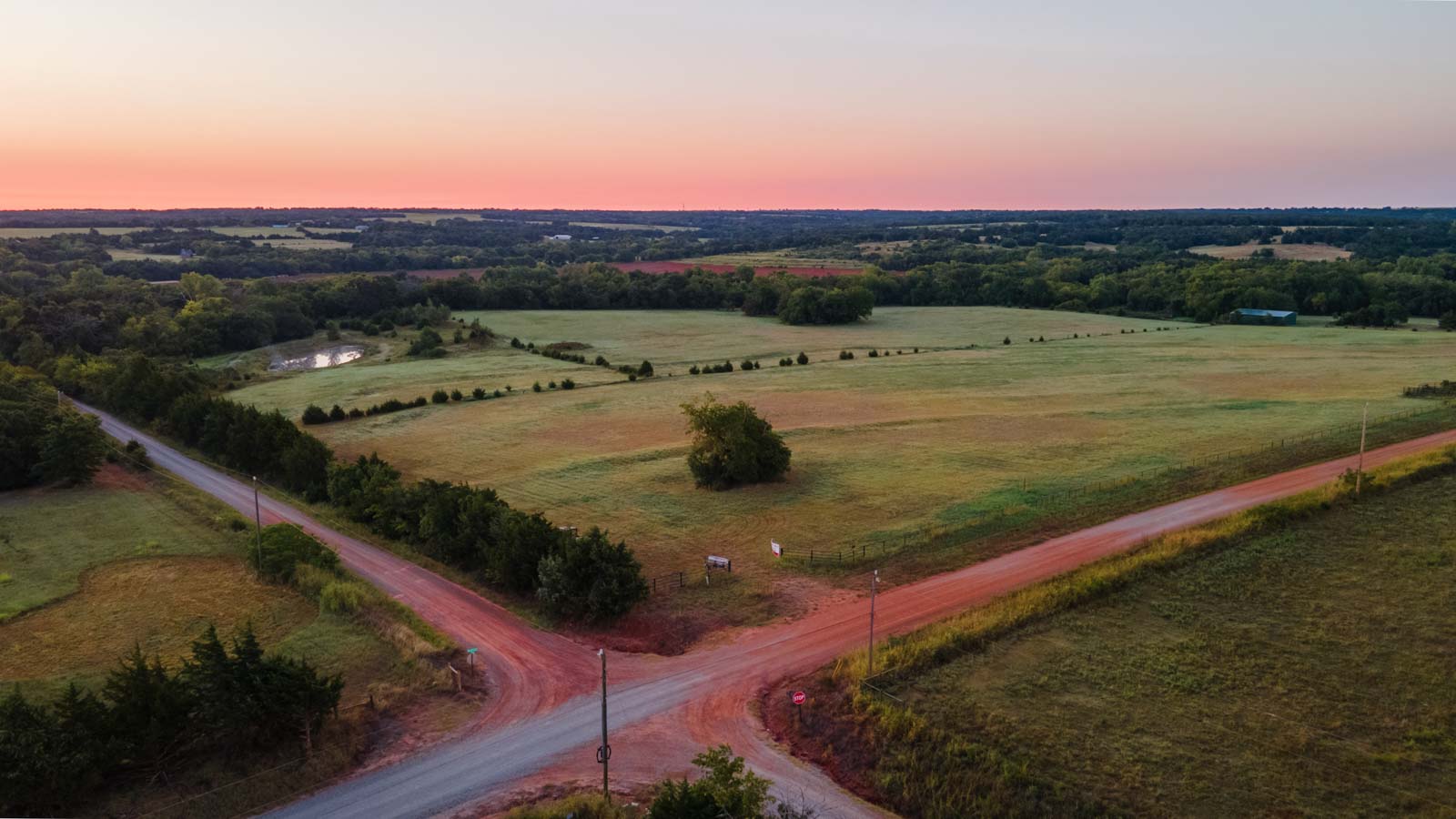
The original property was an 80-acre tract southeast of Guthrie, Oklahoma, in Logan County. It was located along Westminster Road and Triplett Road, giving it a strong rural location with convenient access to the Guthrie and Oklahoma City metro side of the market.
That location mattered.
Land near Guthrie, Edmond, and the north side of the Oklahoma City metro has continued to attract buyers who want acreage, privacy, room to build, and a rural feel without being completely disconnected from town. The market is not the same as deep rural land with limited demand. This area has a stronger buyer pool because it sits within reach of larger employment centers, schools, services, and metro growth.
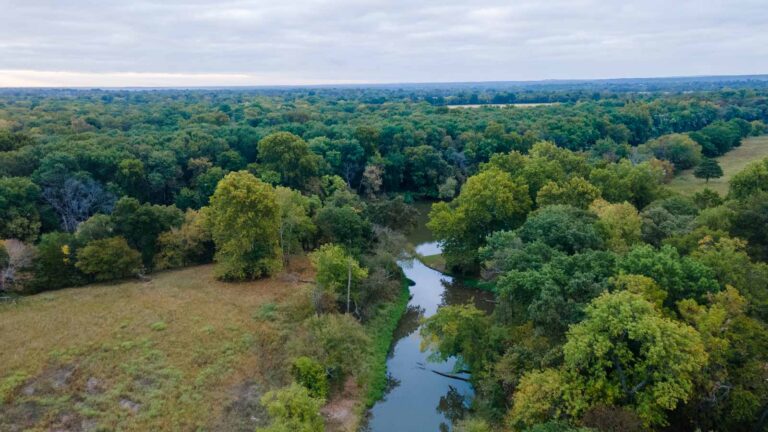
The property had open pasture, rolling views, paved road access, and enough usable ground to make a split strategy realistic.
The problem was the floodplain.
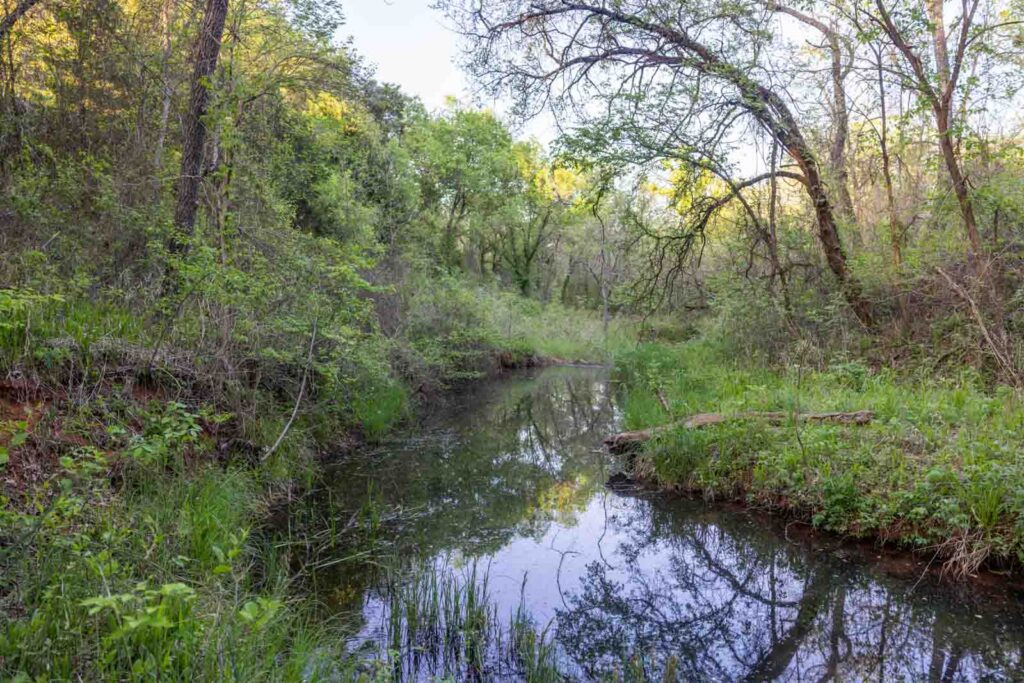
Roughly 23.6 acres of the 80 acres sat in FEMA floodplain. That meant a meaningful portion of the property had limitations, especially for buyers thinking about future home sites, structures, financing, insurance, or long-term usability.
But the entire property was not floodplain.
That is the part many people miss.
When evaluating floodplain land, the question is not simply, “Is there floodplain?” The better question is, “Where is the floodplain, how much of the property does it affect, what land remains usable, and can the tracts be designed in a way that still gives buyers functional acreage?”
On this property, the answer was yes.
The Negotiation
The original asking price was $950,000.
After reviewing the property, running comparable sales, studying the split potential, and factoring in the floodplain, I recommended an offer below the asking price. The buyer ultimately purchased the property for $850,000, which was $100,000 under the original list price.
That negotiation mattered because it gave the project room to breathe.
When a land investment has a challenge like floodplain, the purchase price has to reflect that challenge. You cannot pay a perfect-land price for an imperfect property and then hope the market ignores the issue later.
Floodplain does not have to kill a deal, but it does have to be priced correctly.
The discount on the front end helped create enough margin to justify moving forward with the split.
Why I Still Liked the Property
Even with the floodplain, there were several reasons I liked this property.
First, the location was strong. Southeast of Guthrie gives buyers access to a rural setting while still being within reach of the Oklahoma City metro. For land buyers who want space but do not want to be too far out, that area can make sense.
Second, the property had paved road access. That is a big deal for rural acreage buyers. Paved frontage can make a property feel more accessible, more usable, and easier to visit in different weather conditions.
Third, the land had open pasture and rolling views. Not every buyer wants thick timber. In this market, open usable ground can be highly attractive for homesites, animals, hobby farming, or recreational use.
Fourth, the property could be split into tracts that served different budgets and buyer needs. That was the biggest opportunity.
An 80-acre property at $850,000 is not an easy purchase for the average land buyer. But smaller tracts create more entry points. A buyer who cannot buy the whole 80 acres may be able to buy 1.75 acres, 2.5 acres, 8 acres, 9 acres, 10 acres, or 16 acres.
That is where the resale plan started to make sense.
Floodplain Did Not Kill the Deal
The most important part of this case study is the floodplain.
A lot of people talk about floodplain like it automatically ruins land. That is not always true.
Floodplain can reduce usable building area. It can affect future development plans. It can create concerns for buyers, lenders, and insurers. It can make some buyers pass entirely.
But land can still have value even when part of it is in floodplain.
Some buyers may use floodplain areas for pasture, hay, recreation, wildlife, trails, or open space. Some buyers may simply care that the buildable portion of the tract is outside the floodplain. Others may be comfortable with the limitation if the price, location, and remaining usable acreage make sense.
The job was not to hide the floodplain. The job was to understand it, work around it, and price the tracts in a way that made sense.
That is the difference.
Bad land marketing ignores problems. Good land strategy accounts for them.
The Split Strategy
After closing, the property was surveyed and split into multiple tracts.
I helped market and sell 66.92 acres from the original 80-acre purchase. The tracts sold ranged from smaller acreage pieces to larger rural tracts.
The sold tracts included:
Tract 2, 1.75 acres, sold for $49,500.
Tract 3, 7.98 acres, sold for $140,000.
Tract 4, 2.5 acres, sold for $60,000.
Tract 6, 9 acres, sold for $170,000.
Tract 7, 2.69 acres, sold for $45,000.
Tract 8, 9 acres, sold for $180,000.
Tract 9, 10 acres, sold for $170,000.
Tract 10, 8 acres, sold for $130,000.
Tract 11, 16 acres, sold for $190,000.
Together, those sales totaled $1,134,500 across 66.92 acres.
The buyer kept the remaining approximate 13 acres.
That is the story of the project. The investor purchased the full 80 acres for $850,000, sold 66.92 acres for $1,134,500, and still retained additional acreage after those sales.
The Timeline
This was not a one-week flip or a quick social media sale.
The original purchase closed on April 15, 2024. The first resale tract was listed on April 19, 2024. The final tract I represented in the project sold on June 18, 2025.
That means the resale process took a little over 14 months from the first listing to the last closing.
That timeline is important because land investors need to be realistic.
Splitting acreage can work, but it usually takes time. Buyers have questions. Surveys take time. Closings take time. Rural land is not always as liquid as a normal residential home in town.
A good land split needs enough margin to survive the holding period.
This one worked because the purchase price, tract layout, location, and resale values lined up.
The Numbers
The original property was listed at $950,000.
The buyer purchased it for $850,000.
I helped sell 66.92 acres for $1,134,500 before expenses.
That is $284,500 more than the original purchase price, while the buyer still retained about 13 acres.
That figure is not net profit.
It does not subtract survey costs, closing costs, commissions, holding costs, financing costs, taxes, or other project expenses. On the original purchase, there was a 3% commission. On the resale side, there was a 4% listing commission and up to a 3% buyer agent commission offered depending on the transaction, along with standard closing costs.
So I would not present this as a clean net profit number.
But from a gross resale standpoint, the numbers show why the project made sense.
The value came from buying the property at the right number, accepting the floodplain challenge, surveying the land into practical tracts, and selling those tracts to buyers who wanted smaller acreage in that location.
Why the Smaller Tracts Worked
The original property was an 80-acre tract.
That size can be attractive to a certain buyer, but it is also expensive. At $850,000, the buyer pool is smaller. Not every rural land buyer can afford that total price, even if they like the location.
Smaller tracts changed the buyer pool.
A 1.75-acre buyer is not always the same person as a 16-acre buyer. A buyer looking for a small homesite may not need 80 acres. A buyer looking for more room may want 8, 9, 10, or 16 acres. By creating a mix of sizes, the project opened the property up to multiple buyer types.
That is one of the main advantages of a smart split.
The goal is not just to divide land into as many pieces as possible. The goal is to create tracts that match actual demand.
In this case, the tract sizes allowed buyers to choose based on budget, desired acreage, location within the property, floodplain impact, road access, views, and usability.
Why the Floodplain Needed a Plan
Floodplain affects buyer confidence.
Even if a tract has a strong homesite outside the floodplain, buyers may still ask questions. They want to know where the floodplain is. They want to know what part of the property is usable. They may want to understand whether they can build, whether a lender will have concerns, and whether insurance is needed.
That is why the survey and property layout mattered.
The tracts had to be positioned in a way that made sense. Buyers needed to be able to understand what they were buying. The floodplain needed to be treated as a real due diligence item, not brushed aside.
That is also why I like this as a case study.
It shows that imperfect properties can still work, but only if the issues are handled clearly.
No Major Improvements Were Needed
No major improvements were done besides survey work.
That matters because the project was not successful because someone came in and spent a large amount changing the property. There was no major road building, no heavy clearing, no big utility extension, and no major construction.
The value was created mainly through:
Buying below the original asking price
Understanding the floodplain issue
Surveying the property into smaller tracts
Pricing those tracts for the market
Marketing the opportunity clearly
Selling to buyers who wanted acreage near Guthrie and the OKC metro side
That is a different kind of value creation.
It is not flashy, but it is real.
What This Deal Teaches Landowners
If you own acreage near Guthrie, Edmond, Logan County, or the Oklahoma City metro, this case study shows why it is worth looking at your land from more than one angle.
Some landowners only think in terms of one buyer buying the whole property. Sometimes that is the right strategy. But not always.
If your property has road frontage, usable land, a good location, utility access, or multiple natural building sites, there may be a stronger strategy than selling it as one large tract.
That is especially true if the total price of the whole property limits the buyer pool.
A smaller tract strategy can sometimes bring more buyers to the table because it creates more attainable price points. Buyers who cannot afford 80 acres may still be very interested in 5, 8, 10, or 16 acres.
The key is doing it correctly.
You need to understand survey costs, access, floodplain, utilities, county requirements, buyer demand, and likely resale values before deciding whether a split makes sense.
What This Deal Teaches Investors
For investors, this deal is a reminder that not every opportunity looks perfect at first glance.
The easy response would have been to walk away because of the floodplain. But the better question was whether the floodplain could be worked around.
In this case, it could.
The purchase price reflected the issue. The land still had enough usable acreage. The location was strong. The tract sizes could be designed around buyer demand. The resale values supported the plan.
That is what made the deal work.
But this is also where investors need to be careful. A floodplain property with the wrong layout, poor access, weak buyer demand, or too high of a purchase price can turn into a problem fast.
You do not make money just because a property is discounted. You make money when the discount is tied to a plan that actually works.
What This Deal Teaches Buyers
For buyers, this case study shows why it is important to understand the difference between imperfect land and bad land.
A property can have floodplain and still be useful.
The real question is whether the tract still fits your intended use. If you want to build, you need to know where the floodplain is, where the likely homesite is, and what local requirements or lender concerns may apply. If you want pasture, recreation, wildlife, or open space, some floodplain land may still serve a purpose.
That does not mean buyers should ignore floodplain. They should take it seriously.
But they should also understand it clearly before assuming the whole tract is unusable.
The Bigger Lesson
The Guthrie 80 project worked because the property had a problem, but it also had a plan.
The problem was obvious: roughly 23.6 acres of floodplain.
The plan was to negotiate the purchase price down, survey the property into practical tracts, account for buyer concerns, and sell the usable portions in a way that made sense for the market.
The original listing was $950,000. The buyer purchased it for $850,000. I helped sell 66.92 acres for $1,134,500 before project expenses, and the buyer retained the remaining acreage.
That is a successful land split.
Not because the land was perfect, but because the strategy matched the property.
Thinking About Selling or Splitting Land Near Guthrie?
If you own land near Guthrie, Edmond, Logan County, or the Oklahoma City metro and you are wondering whether it should be sold as one piece or split into smaller tracts, I can help you think through the numbers.
If you are an investor looking at rural acreage, I can also help review the opportunity before you buy so you understand the likely resale strategy, buyer demand, and potential issues before you are already committed.
Seller links
Selling Land in Oklahoma Guide
How To Improve Land Before Selling In Oklahoma
How To Market Land For Sell In Oklahoma
Selling a Home
Selling Vacant Land
Selling Commercial
Selling Farm Ranch
Selling New Construction
Broken Arrow Real Estate Agent
Tulsa Real Estate Agent
Areas I Serve Across Oklahoma
Commercial Land in Broken Arrow
Media
Contact Me
Buyer Links
Buying Land In Oklahoma Guide
How To Confirm Legal Access When Buying Land In Oklahoma
How To Confirm Rural Water
How to confirm electric
How to confirm utilities
How to see if your land is buildable
How To Check Septic And Sewer Availability On Land In Oklahoma
How To Check Internet And Cell Service On Rural Oklahoma Land
How To Check Utility Easements On Land In Oklahoma
Gas And Propane Availability On Land In Oklahoma
Buying Vacant Land