
Broken Arrow • Battle Creek neighborhood guide
Shenandoah Valley & Shenandoah Valley II Homes for Sale
A golf-course setting, established homes, and a neighborhood worth understanding beyond the listing photos. Explore Shenandoah Valley and Shenandoah Valley II, compare sales, and learn what ownership here involves.
A neighborhood shaped by the course
Get to know Shenandoah Valley
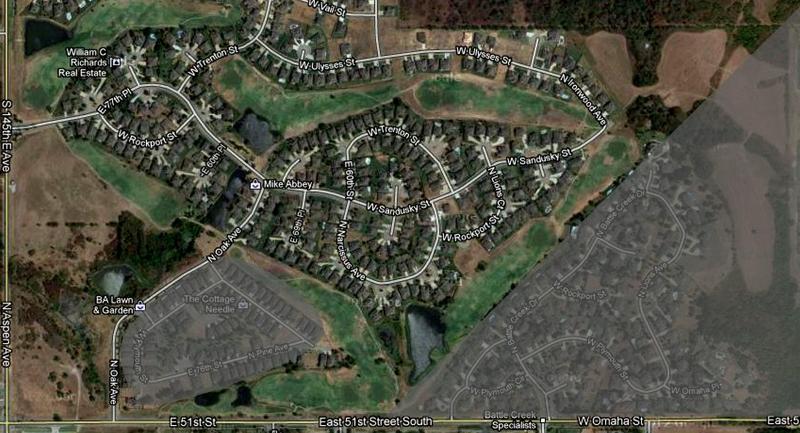
The association describes Shenandoah Valley as a 182-lot community nestled between four fairways of Battle Creek Golf Course. Its community history says all lots were occupied and part of the property owners’ association as of January 2013. This guide covers both subdivision names used in the listing search: Shenandoah Valley at Battle Creek and Shenandoah Valley II at Battle Creek.
The Sandusky entrance off Aspen is a useful starting point for exploring the neighborhood. Visit the actual streets and lots you are considering, then test your route to work, shopping, and the Broken Arrow Expressway. A golf-course setting can be appealing, but each property’s view, privacy, traffic exposure, and maintenance needs are different.
Start your search
Homes in Shenandoah Valley & Shenandoah Valley II
Browse listings for both phases below. Review each listing’s current status, property details, and disclosures. Contact me if you want help comparing homes or arranging a showing.
Open the full neighborhood search . Prices and availability can change.
Two phases. One neighborhood association.
Shenandoah Valley I vs. Shenandoah Valley II
The names are similar, but the distinction matters when searching listings, comparing sales, and planning improvements. The original phase generally appears in MLS as Shenandoah Valley at Battle Creek, without an “I.” The second appears as Shenandoah Valley II at Battle Creek.
The published Phase II declaration identifies the Shenandoah Valley at Battle Creek Property Owners Association and includes owners in both phases in its membership provisions. These are two sets of subdivision documents within a shared association framework, rather than proof of two unrelated HOAs.
| Detail | Shenandoah Valley / Phase I | Shenandoah Valley II |
|---|---|---|
| Subdivision size | 67 lots in the 2024 Broken Arrow housing assessment. | 115 lots in that assessment. |
| Applicable document | Phase I covenant PDF. | Phase II covenant PDF. |
| Detached accessory buildings | Section 3.9 permits certain residential accessory buildings with compatible design and architectural approval. | Section 3.9 limits structures to those attached to the house. |
| Original golf/common-area fence approval | The reviewed fence provision does not include the additional occupancy-permit sentence found in Phase II. | Section 3.12(C)(5) adds installation and city acceptance before an occupancy permit. |
| Current annual assessment | Not verified from an official current assessment notice. Different listing amounts do not establish different phase rates. | |
Sources: 2024 Broken Arrow housing assessment; Phase I covenants; Phase II covenants, Sections 3.9, 3.12 and 4.1–4.2. These are summaries of the posted documents; obtain amendments and current approval requirements for the property.
What is similar?
Both documents specify baseline finished living areas of 1,500 square feet for one-story homes and 1,700 for multilevel homes, with waiver provisions, and a garage for at least two vehicles. Both require architectural review of specified exterior work and prohibit above-ground pools. These are document standards, not a description of every existing home.
For buyers, that means the better comparison is often the individual property’s layout, condition, lot setting, and ownership costs. The phase name alone does not tell you which home offers better value.
Confirm the phase by legal description
Start with the subdivision name, lot, and block in the title documents and recorded plat. Use the MLS field to organize your search, then reconcile any mismatch with the title company. Street names and marketing descriptions are useful clues, but they do not establish which restrictions apply.
Estates at Shenandoah is a separate subdivision name. It is not included in this two-phase search. Similar branding is not a reason to apply these documents to an Estates property.
Look beyond asking prices
A neighborhood sales snapshot
The historical MLS summary supplied for this page for January 2024 through October 21, 2026 contains 25 closed transactions across these two subdivision labels, totaling $9,491,142 in reported sales volume.
| Subdivision | Closed sales | Median sale price | Median cumulative days on market |
|---|---|---|---|
| Shenandoah Valley | 14 | $382,500 | 16 |
| Shenandoah Valley II | 11 | $357,900 | 36 |
Source: historical MLS summary supplied by Corbett Campbell and retained from the previous page. The underlying export was not re-audited for this update. Counts represent transactions in the reviewed dataset, not guaranteed complete neighborhood activity or unique homes. Subdivisions follow MLS labels. October 2026 is a partial period. These are neighborhood sales, not a claim of Corbett’s personal production.
The difference between these medians does not establish that one phase is worth more than the other. Home size, condition, improvements, lot position, and the mix of properties sold can change the result. For a specific home, comparable recent sales matter more than a broad neighborhood average.
Ownership costs & contacts
HOA dues: what is published and what to confirm
Get the current assessment in writing
Public listing records conflict even within Phase II: 4212 N Oak Avenue reports $220 annually, while 1504 W Trenton Street reports $125 annually. A separate neighborhood guide reports $250 as of January 7, 2026. None of those replaces an association-issued statement for the home you are buying.
Do not read these amounts as Phase I versus Phase II pricing. Ask management for current annual dues, payment deadlines, transfer charges, special assessments, outstanding balances, and any approved increases. If a seller says dues are paid, request the account statement and confirm the period covered.
Published references: 4212 N Oak Avenue; 1504 W Trenton Street; dated neighborhood dues reference.
What do dues support?
The HOA FAQ identifies maintenance of common areas, the two ponds south of Sandusky, the entrance from Aspen, and cul-de-sac islands. Listed expenses include landscaping, mowing, irrigation, pond treatments, and electricity for pumps and lighting. This does not establish that individual household utilities or golf fees are included.
Details buyers should know
Golf views come with boundaries
No fishing in HOA ponds
The association’s posted FAQ prohibits fishing. It describes the ponds as flood-control facilities rather than recreation areas and explains that fishing line and debris can damage fountain equipment. A pond view should not be marketed as fishing access.
Cart paths are not public trails
The HOA says the golf course and its cart paths are for golfers, not neighborhood walking or bicycling. Do not treat a nearby cart path as a recreational trail available with homeownership.
Golf and HOA membership are separate
The association states it is not affiliated with Battle Creek Golf Club. Confirm tee times, fees, and playing arrangements with the course. A golf-facing home does not automatically include golf privileges.
Review your phase’s covenants
Use the comparison above to choose the appropriate document. Match the property’s legal description to the applicable documents and obtain amendments before planning exterior work or relying on a particular permitted use.
Fences and vehicle storage: shared rules to check
Both posted covenants use a four-foot side/rear fence baseline, generally green chain link with wood posts and rails, with limited decorative and screening exceptions. Golf-boundary gates are prohibited. Both also restrict inoperative vehicles and address screening of boats, campers, and similar vehicles. See Sections 3.10 and 3.12.
A privacy project deserves an early conversation with the association. Bring a drawing showing the proposed fence’s height, material, and location relative to the house, lot lines, and easements. Do not order materials based only on a contractor’s familiarity with another Battle Creek subdivision.
The phase comparison above explains the separate outbuilding provisions. For roofing, paint, landscaping, additions, or other exterior changes, request the current architectural application and written direction before work starts. HOA approval and a city permit answer different questions.
A useful detail in the public record
Ponds, drainage, and a documented spillway project
Broken Arrow’s May 6, 2025 council record shows approval of a $69,250 construction contract for erosion mitigation and repairs to the leaking detention-pond spillway in Reserve A. The listed funding source was the 2018 General Obligation Bond.
A later city agenda item dated August 4, 2025 says construction began in July and describes the work as a temporary solution. Its description of the proposed agreement says the work did not commit the city to future improvements or maintenance. Those records do not establish the project’s present condition, completion status, or any current special assessment.
Read the May 2025 contract record and August 2025 agreement agenda item.
Questions for the association
- What work was completed, and what remains?
- Is additional engineering or construction planned?
- How are ongoing repairs budgeted?
- Are any assessments approved or under discussion?
Questions for the property
- Where are the drainage and utility easements?
- Has the seller experienced standing water or drainage repairs?
- Does the survey show restrictions on the intended project area?
- What does an inspection identify about grading and runoff?
A neighborhood infrastructure project is not proof that a particular house has flooded. Evaluate the exact parcel, disclosures, current flood mapping, and inspection findings. The useful takeaway is to ask informed questions, not to label every home with the same risk.
Buying with a clear plan
Compare the home, the lot, and the ongoing cost
Start with the layout and condition, then evaluate the lot. A course view may be a priority for one buyer, while another prefers backyard privacy or a simpler maintenance routine. Those preferences should guide your search before finishes and listing photos take over.
- Major systems: Ask about roof age, HVAC replacement, water heaters, drainage, and repair history.
- Improvements: Gather information about additions, remodeling, exterior changes, and any required approvals.
- Ownership budget: Obtain insurance quotes, estimated taxes, HOA confirmation, and realistic maintenance allowances.
- Schools and access: Verify school assignments for the exact address and test your actual commute.
- Future projects: Check the applicable rules before assuming you can add a pool, change fencing, build a shed, or use the home as a rental.
I can help you compare properties, organize questions, and work through the purchase process. Inspections, title review, and association documents each answer different questions; none should be replaced by an attractive listing description.
Selling in Shenandoah Valley
Make the value of your home clear
Buyers need to understand what separates your home from the other options. Document major replacements, explain meaningful remodeling, and show the layout, outdoor space, and lot setting accurately. If your property overlooks the course, good photography can communicate that setting without implying access rights that do not come with the home.
I can help compare recent sales and current competition, identify useful preparation work, and develop a marketing plan. Pricing should account for condition, size, garage capacity, layout, and lot position. When offers arrive, compare seller-paid costs, repair requests, contingencies, and timing alongside the purchase price.
Discuss your home’s valueQuick answers
Questions about buying and selling here
Should I search both subdivision names?
Yes. Search Shenandoah Valley at Battle Creek and Shenandoah Valley II at Battle Creek together for neighborhood options, then identify the phase of each home before comparing restrictions and sales.
Is Phase II automatically more expensive?
No. Your historical sales summary actually shows a lower Phase II median for the reviewed period, but that does not establish a lasting price relationship. The homes sold, their condition, size, location, and sale dates influence the result.
Can I compare sales across both phases?
Yes, when the homes are genuinely comparable. Start with similar size, age, layout, garage space, updates, and lot setting. Explain meaningful differences instead of applying a flat price per square foot to every home.
How should I evaluate a golf-facing home?
Visit during play, look at sightlines from the patio and windows, and ask the seller about ball strikes and repairs. Compare privacy, afternoon sun, maintenance activity, and usable outdoor space. A view premium should be supported by comparable sales.
What should a seller gather before listing?
Collect roof and mechanical replacement dates, renovation receipts, warranties, architectural approvals, available surveys, and current association information. Clear documentation helps buyers understand improvements and reduces unanswered questions during a transaction.
Can Corbett help with either phase?
Yes. I can help buyers compare homes and help sellers prepare, price, and market a property in either phase. We start with the specific home and your goals, then work through the relevant details.
Let’s plan your next move.
Buying or selling in Shenandoah Valley at Battle Creek? Tell me about your home, your search, and your timeline. We can start with the details that matter to you.
Corbett Campbell | OUR OK Realty
918 810 9639
corbett@ourokrealty.com