Selling Vacant Land in Oklahoma
How to navigate vacant land real estate without getting burned.
Selling Vacant Land in Oklahoma
Selling vacant land is not hard because land is simple. It is hard because buyers need help understanding what they are looking at.
That is where a lot of land listings go wrong.
A house buyer can walk through the front door, see the kitchen, count bedrooms, look at the backyard, and compare it to other homes pretty quickly. Vacant land is different. A buyer may be looking at trees, grass, a county road, a fence line, a pond, a creek, or a map pin and trying to decide what the property could become.
That takes more explanation.
A good vacant land listing should help buyers understand access, utilities, road frontage, topography, buildability, property condition, location, and likely use. It should not make them guess.
If you are thinking about selling vacant land in Oklahoma, the first step is not just putting the property online. The first step is figuring out what you own, who the likely buyer is, what the property is worth, and what strategy gives you the best shot at the outcome you want.
Some vacant land needs stronger marketing. Some needs better access. Some needs a price correction. Some needs to be split into multiple listing options to attract more buyers. Some needs nothing more than honest presentation and the right exposure.
The strategy depends on the land.
Selling Land Starts With Finding Out Your Why
Before I talk about pricing or marketing, I want to understand why the owner is selling.
That does not mean I need every personal detail. It means the reason behind the sale changes the plan.
Some sellers want top dollar and are willing to wait for the right buyer. Some inherited land and do not want to keep paying taxes, worrying about maintenance, or managing a property they do not use. Some are selling to reinvest. Some need to move quickly because of finances, family changes, or another opportunity.
Those are different situations.
If your goal is to maximize value, the property may need stronger presentation, better photos, more detailed marketing, and a pricing strategy that allows time for the right buyer to show up.
If your goal is speed, the strategy may need to be more aggressive. Pricing, terms, and marketing need to create momentum quickly.
If your goal is to reinvest, timing matters. The sale price is important, but so are the contract terms, closing timeline, and certainty of the buyer.
There is no one-size-fits-all land strategy.
The best plan starts with your goal.
Why Vacant Land Is Different From Selling a House
Vacant land has fewer emotional buyers than houses.
That does not mean buyers do not care. They do. But they usually care in a different way.
A home buyer may fall in love with a kitchen, a layout, or a neighborhood. A land buyer is usually trying to solve more practical questions.
Can I get to it?
Can I build on it?
Can I get electric?
Is there water nearby?
Will it pass for septic?
Is it in floodplain?
Can I hunt it?
Can I run cattle?
Can I put a shop or cabin here?
Can I reach the pond or creek?
Is the road frontage usable?
Is there anything hidden that will cost me later?
Those questions are why vacant land needs a different marketing approach.
A few photos and a short description are usually not enough. Buyers need enough information to feel comfortable taking the next step.
That does not mean promising things you cannot guarantee. It means presenting what is known, being clear about what still needs to be verified, and helping the right buyer understand the opportunity.
The Biggest Mistake Vacant Land Sellers Make
The biggest mistake I see is treating vacant land like a basic home listing.
Put it online. Add a few photos. Mention the acreage. Wait.
That is not a strategy.
Land needs context.
A buyer needs to know why the property matters. They need to understand what makes it usable, what makes it valuable, and what problems they may need to check before closing.
If a property has legal access, that matters. If it has a usable entrance, that matters. If utilities are nearby but not on site, that needs to be explained clearly. If the property has a pond, creek, open pasture, mature timber, road frontage, development potential, or good recreational use, the listing should show it.
A vacant land listing should reduce confusion.
The more a buyer has to guess, the more likely they are to move on, offer low, or never schedule a showing.
What Actually Impacts Vacant Land Value
Acreage matters, but acreage alone does not determine value.
Two 40-acre tracts in the same county can have completely different values.
One may have paved road frontage, rural water nearby, electric at the road, usable topography, a clean entrance, and multiple build sites. Another may be landlocked, heavily wooded, steep, rough, hard to access, or covered in floodplain.
Those are not the same property.
When I look at vacant land value, I am looking at more than price per acre. I want to understand access, utilities, road frontage, terrain, soil, floodplain, restrictions, surrounding use, market demand, and likely buyer type.
Access is one of the biggest factors. If the property has clear legal access and a usable physical entrance, that helps. If access is unclear, limited, rough, or wet-weather only, that affects value and buyer confidence.
Utilities matter too. Electric, water, septic options, internet availability, and utility distance can all change the buyer pool. A recreational buyer may not care as much. A homesite buyer usually will.
Topography matters. Flat usable land is easier to understand. Steep land, wet land, rocky ground, ravines, or drainage issues can all affect what a buyer is willing to pay.
Location still matters, but it is not the whole story. A good location with poor usability can still struggle. A more rural location with good access, privacy, and strong recreational features can still attract serious buyers.
Pricing Vacant Land Takes More Than Price Per Acre
Price per acre can be helpful, but it can also be misleading.
A seller may look at another property nearby and say, “That one is listed for $8,000 an acre, so mine should be too.”
Maybe. Maybe not.
What does that other property have? Is it smaller? Does it have utilities? Is it buildable? Does it have better road frontage? Is it closer to town? Does it have a pond? Is it outside floodplain? Is it already cleared? Does it have a shop or well? Is it priced too high and sitting?
Those details matter.
Land comps are rarely perfect. That is why pricing vacant land takes judgment. You have to look at what buyers are actually paying for, not just what sellers are asking.
If the property is overpriced, it may sit and lose momentum. Buyers may assume something is wrong with it. If it is underpriced, the seller may leave money on the table.
The right price depends on the seller’s goal, the property condition, and the current buyer pool.
Real Example: Repositioning a Large Lake Eufaula Land Listing
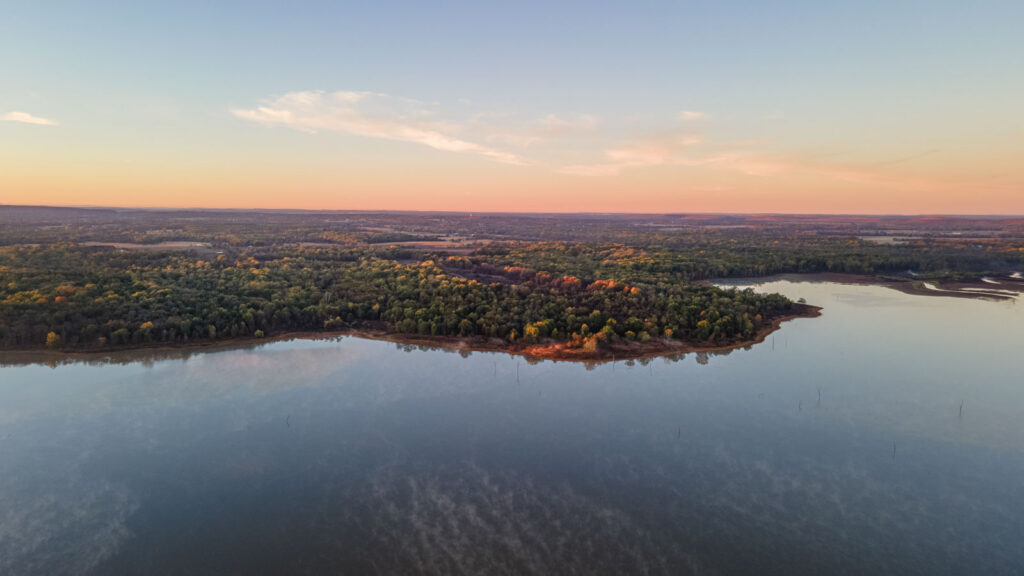
One of the better examples of land strategy I have worked with was a large Lake Eufaula acreage property.
The property had strong features. It had large acreage, lake frontage, hunting use, open ground, wooded areas, and long-term potential. But it was originally marketed as one large property at $1,590,000 for roughly 246 acres. That created a much narrower buyer pool.
There are only so many buyers who can take down a property that size at that price.
When I got involved, the goal was not to make anyone look bad or pretend the land was not good. The land had real value. The issue was that the strategy needed to create more buyer entry points.
So I repositioned the property into separate tract options.
One listing was around 141 acres. The other was around 103 acres. That allowed buyers to look at the property in different ways. Some buyers may have been interested in the larger lake frontage tract. Some may have been more comfortable with the smaller acreage. Some may have needed a lower total price point to engage.
That separate listing strategy created more visibility and more competition.
Even though the property was marketed in separate pieces, it ultimately sold as a whole to one cash buyer.
That is an important point.
Splitting the listing options did not prevent a full-property sale. It helped expand the buyer pool, create more conversations, and get the property in front of more people.
Another major part of that process was showing the property correctly. On land like that, you cannot expect every buyer to understand the property from the road. We used a side-by-side to show the land so buyers could actually experience the acreage, the lake frontage, the trails, the terrain, and the different sections of the property.
That matters.
Large land needs to be seen. If a buyer cannot get around it, they may never understand it.
Sometimes the Strategy Is the Difference
A property can be good and still need a different strategy.
That is one of the biggest things vacant land sellers need to understand.
If a listing is sitting, it does not always mean the land is bad. It may mean the price is too high. It may mean the listing is not explaining the property well. It may mean the photos are not showing the best parts. It may mean the buyer pool is too narrow. It may mean access is not clear. It may mean buyers do not understand utilities, buildability, or use.
Sometimes the strategy needs to change.
For large tracts, that may mean offering multiple acreage options. For rural land, it may mean improving access or brush hogging trails before photos. For development land, it may mean presenting utilities, frontage, and surrounding growth more clearly. For recreational land, it may mean showing trails, ponds, creek bottoms, wildlife, and access.
The listing should match the property.
Preparing Vacant Land Before Listing
Not every property needs improvements before listing.
Some land is already easy to access, easy to photograph, and easy for buyers to understand. Other land needs basic work before it will show well.
I usually care most about access, visibility, and first impression.
If buyers cannot safely pull onto the property, that is a problem. If the entrance is grown up, unclear, or full of junk, that affects how the property feels. If the best parts of the land are hidden behind brush with no trail, buyers may never see what makes the land valuable.
Small improvements can make a big difference.
That may mean cleaning around the entrance, trimming limbs, moving trash away from the road, brush hogging a trail, adding a basic gate, improving a rough entrance, or making sure the photographer can reach the best parts of the property.
But I do not believe every seller should over-improve before listing.
Clearing too much timber, installing utilities too early, building long gravel roads, or spending money without understanding the buyer pool can waste money.
The goal is not to make the property perfect.
The goal is to make it easier to access, easier to view, and easier to understand.
Suggested internal link: How to Improve Land Before Selling in Oklahoma
Access Can Make or Break a Vacant Land Listing
Access is one of the first things buyers care about.
There are two types of access sellers need to think about: legal access and physical access.
Legal access means the property has a legal right to be accessed. Physical access means a buyer can actually get onto the property in a real-world way.
You can have one without the other.
A property may technically have legal access, but the physical entrance may be grown up, muddy, washed out, blocked, or hard to find. A property may have a trail or path that people use, but the legal access still needs to be verified.
Both matter.
If access is unclear, buyers get nervous. If physical access is difficult, showings get harder. If the property requires four-wheel drive in wet weather, that needs to be communicated clearly.
The easier it is for a buyer to understand and access the property, the easier it is for them to take it seriously.
Suggested internal link: How to Confirm Legal Access When Buying Land
Utilities Can Change the Buyer Pool
Utilities are another major part of vacant land value.
A property with electric at the road, rural water nearby, fiber close, or a known septic path may attract a different buyer than a property with no utilities nearby.
That does not mean every property needs utilities installed before selling. Sometimes installing utilities too early can be expensive and unnecessary. It can also create ongoing minimum bills or put infrastructure in a location the next buyer may not want.
But utility information should be handled clearly.
If electric is nearby, say what is known. If water may be available, point buyers in the right direction to verify. If sewer is not available, explain that septic would likely need to be evaluated by the buyer and the proper professionals. If internet or fiber matters for the buyer pool, it is worth mentioning when known.
A lot of land buyers are willing to do due diligence. But they need enough information to know whether the property is worth investigating.
Suggested internal link: How to Confirm Utilities on Land in Oklahoma
Marketing Vacant Land Takes More Than MLS Exposure
MLS exposure matters, but it is not the whole marketing plan.
Vacant land needs strong photos, useful drone work, clear maps, good directions, and a description that actually explains the land.
A buyer should be able to look at the listing and understand the main features.
Where is the access?
What does the land look like from above?
Is it wooded, open, mixed, flat, rolling, wet, or usable?
Are there ponds, creeks, trails, pastures, lake frontage, or build sites?
What kind of buyer is this property likely best for?
What still needs to be verified?
That is what good land marketing should answer.
Photos from the road are not enough for most vacant land. If the property has trails, ponds, lake frontage, creek access, open fields, timber, or scenic areas, those features need to be shown.
If the photographer cannot get to those areas, the buyer probably cannot either.
That is why access and showability matter.
Buyer Types Matter When Selling Vacant Land
Not all land buyers are the same.
A five-acre homesite buyer may care about utilities, driveway access, restrictions, internet, school district, and whether they can build soon.
A 40-acre recreational buyer may care about privacy, trails, hunting, ponds, timber, and weekend use.
A farm and ranch buyer may care about pasture, fencing, gates, water, hay production, and livestock use.
A development buyer may care about road frontage, utilities, zoning, traffic, surrounding growth, and future demand.
An investor may care about resale, flexibility, location, access, and whether the property has multiple possible uses.
The marketing needs to match the buyer pool.
If a property is marketed too broadly, it may not connect with anyone. If it is positioned clearly, the right buyer can see why it fits.
Offers on Vacant Land Are Not Just About Price
When offers come in, the highest number is not always the best deal.
Vacant land buyers often need time to verify things. They may need to check utilities, access, septic options, surveys, zoning, restrictions, floodplain, financing, or buildability.
That does not automatically make a buyer weak. It means land has more due diligence than a basic home purchase.
The seller needs to look at the whole offer.
What is the purchase price?
Is it cash or financed?
How long is the inspection period?
Does the buyer need a survey?
Are there contingencies?
Does the buyer seem serious?
Can they close?
Are the timelines realistic?
A lower offer with clean terms may be better than a higher offer that is unlikely to close.
Land negotiations need to look past the headline price.
Selling Vacant Land in Broken Arrow, Tulsa, and Surrounding Areas
The vacant land market can change a lot depending on location.
Land near Broken Arrow, Tulsa, Bixby, Coweta, Wagoner County, and surrounding growth areas may attract buyers thinking about homesites, investment, development, or long-term appreciation.
Land farther out may attract buyers looking for hunting, recreation, privacy, pasture, or rural living.
Properties near city limits may have more restrictions, more utility questions, and more development pressure. Rural properties may have fewer restrictions but more questions about access, water, electric, septic, and road conditions.
That is why local context matters.
A wooded recreational tract should not be marketed the same way as commercial frontage. A five-acre homesite should not be positioned the same way as 100 acres of lake-area land. A rural hunting tract should not be priced like development land unless the buyer pool supports it.
Different land needs different strategy.
Why Work With Someone Focused on Land
Selling vacant land takes a different level of attention.
It is not just about putting a sign in the ground.
It is about understanding what makes the property valuable, what may hold buyers back, and how to present the land so the right buyer sees the opportunity.
I pay attention to the details that matter on land: access, utilities, buildability, road frontage, buyer type, maps, photos, showing routes, property condition, and how the land will actually be used.
I also believe in being direct with sellers.
If the property needs access work before listing, I will say that. If the property is overpriced, I will say that. If I think the seller is about to spend money in the wrong place, I will say that too.
The goal is not to list the property and hope.
The goal is to build a plan that fits the property, the seller’s reason for selling, and the buyer pool most likely to care.
Start With a Conversation
If you are thinking about selling vacant land in Oklahoma, the first step is not automatically listing it.
The first step is understanding what you own, what it may be worth, who the likely buyer is, and what strategy gives you the best chance of reaching your goal.
You may need basic improvements before listing. You may not. You may need better photos, stronger maps, clearer utility information, adjusted pricing, or a different way to position the property.
If you are thinking about selling vacant land, I would be happy to help you look at the property, talk through your goals, and figure out the best next step.
Seller links
Selling Land in Oklahoma Guide
How To Improve Land Before Selling In Oklahoma
How To Market Land For Sell In Oklahoma
Selling a Home
Selling Vacant Land
Selling Commercial
Selling Farm Ranch
Selling New Construction
Broken Arrow Real Estate Agent
Tulsa Real Estate Agent
Areas I Serve Across Oklahoma
Commercial Land in Broken Arrow
Media
Contact Me
Buyer Links
Buying Land In Oklahoma Guide
How To Confirm Legal Access When Buying Land In Oklahoma
How To Confirm Rural Water
How to confirm electric
How to confirm utilities
How to see if your land is buildable
How To Check Septic And Sewer Availability On Land In Oklahoma
How To Check Internet And Cell Service On Rural Oklahoma Land
How To Check Utility Easements On Land In Oklahoma
Gas And Propane Availability On Land In Oklahoma
Buying Vacant Land